
Introduction
In the realm of infrastructure development, especially in the water and wastewater sectors, the choice of piping materials is of paramount importance. Welded steel pipes have emerged as a reliable and versatile option, offering a wide range of applications and advantages. Among the various types of welded steel pipes, spiralweld pipe stands out for its unique manufacturing process and exceptional performance characteristics. This article delves into the world of welded steel pipes, with a particular emphasis on spiralweld pipes used in water, wastewater piling, and casing applications.
1.Understanding Welded Steel Pipes
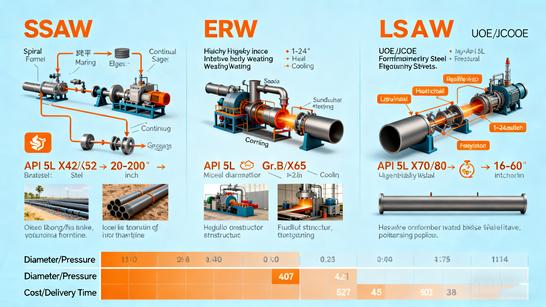
Welded steel pipes are formed by joining steel plates or strips through a welding process. This method allows for the production of pipes with varying diameters and wall thicknesses, making them suitable for a diverse set of applications. Unlike seamless pipes, which are created from solid billets, welded pipes offer greater flexibility in terms of size and cost-effectiveness. The welding process can be carried out using different techniques, such as electric resistance welding (ERW), submerged arc welding (SAW), and spiral welding, each with its own set of benefits and limitations.
2.Spiralweld Pipe: Manufacturing Process and Features
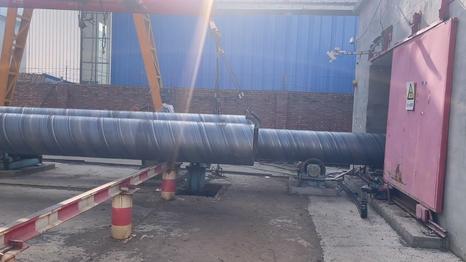
Spiralweld pipe, as the name suggests, is manufactured by winding a steel strip in a spiral pattern and then welding the edges together. This continuous process enables the production of long-length pipes, which is a significant advantage in many applications. The spiral welding technique results in a pipe with a uniform wall thickness and a high degree of structural integrity. The seam runs along the length of the pipe in a helical pattern, distributing the stress evenly and enhancing the pipe's ability to withstand external pressures and loads.
One of the key features of spiralweld pipes is their large diameter range. They can be produced in diameters from relatively small sizes up to several feet in width. This makes them ideal for applications where large volumes of fluid need to be transported, such as in water and wastewater treatment plants, irrigation systems, and industrial pipelines. Additionally, the ability to manufacture pipes in long joint lengths, up to 50 feet or more in some cases, reduces the number of joints required during installation, minimizing the risk of leaks and improving the overall efficiency of the piping system.
3.Applications of Spiralweld Pipe in Water and Wastewater Sectors
3.1 Line Work Applications
In line work applications, spiralweld pipes are widely used for transporting water and wastewater over long distances. Their large diameter and long joint lengths make them suitable for main transmission lines that connect water sources, treatment plants, and distribution networks. The pipes' robust construction ensures reliable performance even under high-pressure conditions, reducing the need for frequent maintenance and repairs. For example, in a large-scale water supply project, spiralweld pipes can be used to convey water from a reservoir to a treatment plant, and then distribute it to various parts of a city or town.
3.2 Plant Piping
In water and wastewater treatment plants, spiralweld pipes play a crucial role in the internal piping systems. These plants require a complex network of pipes to handle different processes, such as sedimentation, filtration, disinfection, and sludge handling. Spiralweld pipes, manufactured to comply with relevant standards, can withstand the corrosive environment and high-flow conditions commonly found in treatment plants. AMERICAN, a leading manufacturer, offers a comprehensive range of plant piping solutions, including special fabrications and fittings, all produced in their United States facilities. This ensures high-quality products that meet the specific requirements of each treatment plant project.
3.3 Structural Applications
Spiralweld pipes are also used for structural purposes in water and wastewater projects. For instance, they can be employed as piling or casing in the construction of foundations for water treatment facilities, pumping stations, and other infrastructure. When used as piling, the pipes are driven into the ground to provide support and stability to the structure above. Their high strength and durability make them capable of withstanding the loads imposed by the structure and the surrounding soil conditions. In casing applications, spiralweld pipes are used to protect underground utilities, such as water and sewer lines, during excavation and construction activities. They prevent damage to the existing pipes and ensure the integrity of the underground infrastructure.
4.Standards and Specifications
The quality and performance of spiralweld pipes are governed by various industry standards and specifications. For structural applications, pipes are typically manufactured to standards such as ASTM A252, which covers steel pipe piles for structural purposes. ASTM A139 is another standard that specifies requirements for electric-fusion (arc)-welded steel pipes for use in high-pressure service, with or without factory hydrostatic testing. ASTM A1097 is also relevant for certain structural applications, providing guidelines for the production of steel pipes with specific properties. In some cases, structural pipes may be specified to AWWA C200, which is a standard for steel water pipe for waterworks applications. Adhering to these standards ensures that the pipes meet the necessary quality and safety requirements for their intended use.
Conclusion
Welded steel pipes, particularly spiralweld pipes, have become an integral part of the water and wastewater infrastructure. Their unique manufacturing process, large diameter range, long joint lengths, and high structural integrity make them suitable for a wide variety of applications, from line work and plant piping to structural support. By complying with relevant industry standards, manufacturers can ensure the production of high-quality pipes that meet the specific needs of each project. As the demand for reliable and efficient water and wastewater systems continues to grow, spiralweld pipes are expected to play an increasingly important role in the development and maintenance of these critical infrastructure components.