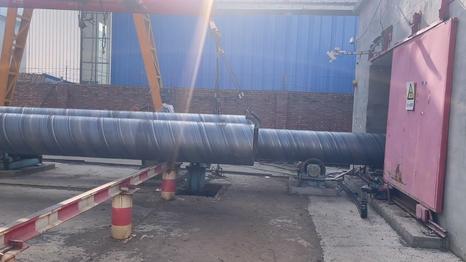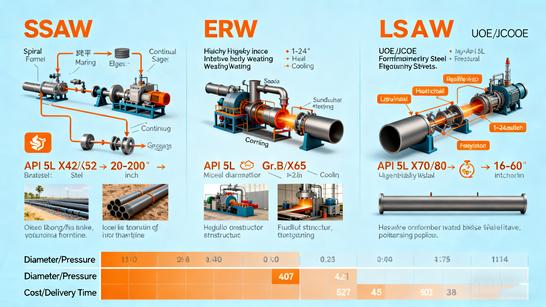

Since 1998, Cangtie Pipe Co., Ltd. has been committed to providing high-quality pipeline materials.
The company has an annual production capacity of over 500,000 tons, serving numerous fields and industries including oil and gas extraction and transportation, shipbuilding and automobile manufacturing, water conservancy and hydropower, environmental protection, mechanical engineering, and infrastructure construction.
Cangtie Pipe always prioritizes product quality and implements rigorous quality control. To ensure product quality, the company established a testing center in 2004. This center is equipped with a range of advanced testing equipment capable of conducting tensile tests, hydrostatic tests, impact tests, DWTT tests, and more.
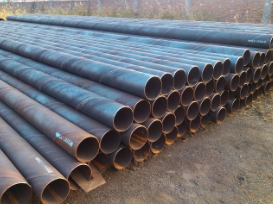
Overview of ASTM A252 SSAW Steel Pipe
Date: 2026-03-10 Views: 866 Tags: ASTM A252 SSAW steel pipe, ASTM A252 spiral welded pipe
Email: hudson@cangtiepipe.com
ASTM A252 is a widely recognized standard published by the American Society for Testing and Materials (ASTM) covering welded and seamless steel pipes for structural applications such as pile foundations, foundation supports, and infrastructure construction. This specification ensures that the steel pipes meet stringent requirements for mechanical strength, weldability, and long-term durability.
Spiral submerged arc welded (SSAW) steel pipes manufactured according to ASTM A252 standards are particularly suitable for pressure and casing applications, including bridge foundations, marine pile foundations, and underground structures. The spiral weld enhances its pressure resistance and load-bearing capacity, providing a cost-effective alternative to seamless steel pipes without compromising structural integrity. The following is an overview of ASTM A252 SSAW steel pipes.
Introduction to ASTM A252 SSAW Piling
- The ASTM A252 standard covers steel piling pipe that is used in the construction industry for foundation applications. The ASTM A252 steel piling pipe is available in three grades based on strength levels: Gr.1, Gr.2, and Gr.3.
- The A252 steel piling pipe is made to requirements that include chemical composition, mechanical properties, and dimensions. The A252 steel piling pipe can be ordered in both welded and seamless steel construction, and each type has its own advantages. Welded steel pipe offers a lower cost option for foundations, while seamless steel pipe provides a higher degree of strength and durability. ASTM A252 Grade 1 and Grade 2 steel piling pipe are suitable for most foundation applications, while Grade 3 steel pipe can be used for high-strength applications.
- ASTM A252 standard stipulates that each section of pipe pile must be weighed individually, and its weight must deviate from the theoretical weight by no more than 15% or 5%. This ensures that the pipe pile can withstand its intended load.
- The outer diameter of the pipe pile must deviate from the specified outer diameter by no more than 1%.
- The wall thickness at any location must deviate from the nominal wall thickness by no more than 12.5%.
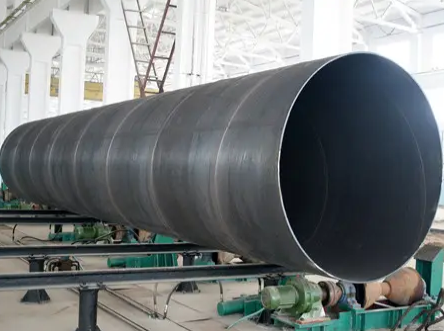
Cangtie supplies ASTM A252 steel pipes conforming to ASTM A252 standards, with the following specifications:
Grades: Grade 1, Grade 2, and Grade 3
Marking: Each steel pipe pile is clearly marked with: manufacturer's name or brand; furnace batch; manufacturing process; outer diameter, nominal wall thickness, length, and weight per unit length.
Sizes: Up to 48-inch welded steel pipes
Wall Thickness: STD, 40, XS, 80, XXS, 160
Length: Single random length/double random length and equal length
Ends: Beveled, Plain
Coating: FBE, 3PE, Galvanized
Why Choose ASTM A252 Spiral Welded Steel Pipe?
ASTM A252 spiral welded steel pipe is widely used in structural engineering due to its reliable performance and cost-effectiveness. Its main advantages include:
1. High Strength and Durability
These steel pipes are designed to withstand heavy loads, making them ideal for demanding pile foundation projects.
2. Economical Choice for Large-Diameter Projects
Compared to seamless steel pipes, spiral welded steel pipes offer a more economical solution for large-scale infrastructure projects.
3. Suitable for a Variety of Demanding Applications
Perfectly suited for bridge foundations, marine pile foundations, and underground structure supports.
4. Excellent Weldability and Easy Installation
Its consistent weld quality and good formability allow for easy on-site installation even in complex environments.
The following are the detailed steps of the manufacturing process:
1. Steel Coil Selection
Select high-quality carbon steel coils according to the ASTM A252 material specification.
Common steel grades include Grade 1, Grade 2, and Grade 3, with Grade 3 having the highest strength and widest application.
2. Spiral Forming
Feed the steel strip into a spiral forming machine and coil it into a spiral shape.
The spiral weld structure enhances load-bearing capacity and internal pressure resistance, making it suitable for structural piles.
3. Submerged Arc Welding (SAW)
Double submerged arc welding (DSAW) is used to obtain high-strength, defect-free welds.
This process ensures weld penetration, uniformity, and high stress resistance.
4. Quality Control and Testing
Ultrasonic and X-ray inspections are used to detect internal and external defects in the pipe.
Hydrostatic testing is used to verify the pipe's ability to withstand high pressure. Dimensional inspection is used to verify the straightness, wall thickness consistency, and outer diameter accuracy of the pipes.
5. Coating and Corrosion Protection
Pipes may be coated with fusion-bonded epoxy (FBE), three-layer polyethylene (3LPE), or bitumen coatings to enhance their resistance to corrosion, moisture, and environmental degradation.
6. Final Inspection and Certification
Each pipe undergoes a final quality inspection to ensure compliance with ASTM A252, ISO 9001, and other relevant standards.
Pipes are marked with their grade, dimensions, furnace number, and manufacturer's name for traceability and documentation.
Specification of ASTM A252
| Item | Details/Specification |
| Standard | A252 |
| Specification | Welded Steel Pipe Piles |
| Type | Electric Resistance Welded (ERW) |
| Size | NPS 1 TO NPS 24 [DN25 to DN600], with nominal average wall thickness as given in ASME B 36.10M or as the customer’s requirement. |
| Outer Diameter | 1-24 inches (33.4-609.6mm) |
| Thickness | 3-12mm |
| Length | Min 3 M, Max 18 M, or according to the customer’s requirement. |
| Ends | Small sizes are plain, large sizes are beveled, or according to the customer’s requirement |
| Surface Treatment | Normally bare or black varnish |
| Packaging | Small sizes below 219.1mm in bundles, large sizes in bulk |
| Testing | Chemical Composition, Heat Analysis, Product Analysis, Tensile Requirements, etc. as customer’s requirements. |
ASTM A252 SSAW Physical Properties
ASTM A252 steel pipes must meet the tensile property requirements listed in the table below. The yield point is the point at which the specimen breaks, and can be determined by the gauge length, divider, or other approved methods of the testing machine. If the obvious yield point cannot be determined, the yield strength at which the specimen undergoes 0.2% permanent displacement or 0.5% total elongation under load should be determined. In other words, the material must meet certain tensile and yield criteria before it can be used. This is to ensure that the material will not break and cause damage under stress or strain.
Steel Grades of ASTM A252 - ASTM A252 GRADE 1/ 2/ 3
Based on tensile strength and yield strength, ASTM A252 is divided into three grades: ASTM A252 Grade 1, ASTM A252 Grade 2, and ASTM A252 Grade 3. Each standard has its own application scenarios, with Grade 2 being the most commonly used. For more information on each type of pipe, you can click the product links below!
Specification of ASTM A252 Grade 1
| Item | Details/Specification |
| Standard | A252 |
| Specification | Welded Steel Pipe Piles |
| Type | Electric Resistance Welded (ERW) |
| Size | NPS 1 TO NPS 24 [DN25 to DN600], with nominal average wall thickness as given in ASME B 36.10M or as the customer’s requirement. |
| Outer Diameter | 1-24 inches (33.4-609.6mm) |
| Thickness | 3-12mm |
| Length | Min 3 M, Max 18 M, or according to the customer’s requirement. |
| Ends | Small sizes are plain, large sizes are beveled, or according to the customer’s requirement |
| Surface Treatment | Normally bare or black varnish |
| Packaging | Small sizes below 219.1mm in bundles, large sizes in bulk |
| Testing | Chemical Composition, Heat Analysis, Product Analysis, Tensile Requirements, etc. as customer’s requirements. |
ASTM A252 Grade 1 Steel Pipe
ASTM A252 Grade 1 steel pipe refers to cylindrical steel pipe piles with a nominal (average) wall thickness, suitable for use as permanent load-bearing members or as shells for constructing casing concrete piles. The American standard ASTM A252 is a commonly used standard for pipe pile materials in building and structural engineering.
Surface defects exceeding 25% of the nominal wall thickness are considered defects. Defects less than 22.5% of the nominal wall thickness can be repaired by welding. Defects must be completely removed before welding.
Applications of ASTM A252 Class 1 Piles
ASTM A252 Class 1 pipe piles are commonly used in large-diameter and large-scale structural engineering projects, such as building and bridge construction. The large diameter helps to evenly distribute the structural weight, while the high-quality material ensures it can withstand various natural elements. Furthermore, these pipe piles are robust and ideal for use in areas prone to earthquakes or other natural disasters. Therefore, ASTM A252 Class 1 pipe piles are an important component of many large-scale construction projects.
Chemical Composition Analysis of ASTM A252 Grade 1 Steel Pipes
Chemical composition analysis is a crucial step in ordering ASTM A252 Grade 1 steel pipes. The analysis should be performed according to the test methods, specifications, and terminology defined in ASTM A751. To ensure the accuracy of the analysis results, the buyer has the right to take two samples from each batch of steel pipes for product analysis. This allows any potential problems to be identified and corrected before the steel piles are put into service. By ensuring that the correct procedures are followed, you can confidently order ASTM A252 Grade 1 steel pipes, as they meet the relevant standards.
Mechanical Properties of ASTM A252 Class 1 Piles
- ASTM A252 Class 1 pipes must possess sufficient strength to withstand the forces specified in the table below. The yield point is the point at which a material begins to undergo permanent deformation under load. Yield points are typically measured by dropping a beam, stopping the gauge length of the testing machine, or other approved methods. If no obvious yield point is observed, the yield strength corresponding to a 0.2% deviation of the gauge length or a 0.5% total elongation of the gauge length under load should be determined. These requirements ensure that the material performs its intended function under stress without excessive deformation.
- According to the standard, each section of ASTM A252 Class 1 pipe pile must be weighed individually. The actual weight of the pipe pile must not deviate from its theoretical weight by more than 15% or 5%, respectively. The theoretical weight is calculated based on the length of the pipe pile and the weight per unit length. If the weight is not specified in the purchase order, the manufacturer is responsible for ensuring that the pipe pile conforms to the specified calculation formula.
- The outer diameter of the pipe pile must not deviate from the specified diameter by more than 1%.
- The wall thickness of the pipe pile at any location must not deviate from the nominal wall thickness by more than 12.5%.
Specification of ASTM A252 Grade 2
| Item | Details/Specification |
| Standard | A252 |
| Specification | Welded Steel Pipe Piles |
| Type | Electric Resistance Welded (ERW) |
| Size | NPS 1 TO NPS 24 [DN25 to DN600], with nominal average wall thickness as given in ASME B 36.10M or as the customer’s requirement. |
| Outer Diameter | 1-24 inches (33.4-609.6mm) |
| Thickness | 3-12mm |
| Length | Min 3 M, Max 18 M, or according to the customer’s requirement. |
| Ends | Small sizes are plain, large sizes are beveled, or according to the customer’s requirement |
| Surface Treatment | Normally bare or black varnish |
| Packaging | Small sizes below 219.1mm in bundles, large sizes in bulk |
| Testing |
Chemical Composition, Heat Analysis, Product Analysis, Tensile Requirements, etc. as customer’s requirements. |
ASTM A252 Grade 2 Steel Pipe
- ASTM A252 Grade 2 steel pipe is one of the most commonly used pile pipes. Due to its extremely high strength, it is often used in applications requiring high-strength structural performance.
- TUSPIPE's ASTM A252 Grade 2 steel pipes fully comply with the ASTM A252 standard. With superior mechanical properties, they provide customers in building and foundation engineering with durable and stable pile foundation solutions.
- ASTM A252 Grade 2 steel pipe is one of the most commonly used pile casings. Pile casings are fundamental to the construction industry. Due to their extremely high strength, they are often used in applications requiring high-strength structures. The ASTM A252 standard was developed specifically for this purpose. Cylindrical ASTM A252 Grade 2 steel pipes can be used in pile foundation engineering, both as the casing for concrete piles and as permanent load-bearing components in specific applications. This specification covers the nominal wall thickness of cylindrical steel pile casings.
Applications of ASTM A252 Class 2 Pipe Piles
With the increasing height of buildings, structures, and bridges, ASTM A252 Class 2 pipe piles are being developed for deep-distance, large-diameter construction. The cylindrical design of ASTM A252 Class 2 pipe piles is suitable for a variety of applications, including retaining walls, various buildings requiring robust foundations, and bridges. This ensures that structures using these pipe piles are robust, stable, and of superior quality, meeting international quality standards. Large-diameter pipe piles are crucial in the construction industry due to their numerous uses and advantages. They help ensure the stability and strength of high-rise structures and bring many other benefits. This makes them an indispensable part of many large-scale construction projects. Therefore, developers must continuously develop large-diameter pipe piles that meet the needs of these projects to ensure their safe and efficient completion.
Chemical Composition of ASTM A252 Grade 2 Steel Pipe Piles
This standard specifies the requirements for ASTM A252 Grade 2 welded and seamless steel pipe piles. Chemical composition analysis is a critical step in confirming compliance with this standard. Analysis should be performed according to the test methods, specifications, and terminology of ASTM A751. At least two samples should be taken for analysis from each batch of steel pipe piles. Therefore, careful reading of the specification and ensuring correct analysis are essential.
Mechanical Properties of ASTM A252 Class 2 Piles
- ASTM A252 Class 2 pipes must meet the minimum tensile strength requirements shown in the table below. The yield point is the point at which the specimen (whether beam, gauge length, or divider) is considered to have failed, typically determined by observing the point where permanent deformation occurs. If a definite yield point cannot be observed, the yield strength must correspond to 0.2% of the original gauge length as permanent offset or 0.5% of the total elongation under load. These methods for determining yield strength are crucial for ensuring that materials meet minimum service requirements. Without these standards, substandard materials may be used, leading to poor performance or even disaster. Therefore, these requirements play a vital role in protecting people and property.
- According to this standard, each section of ASTM A252 Class 2 pipe pile must be weighed individually. The actual weight of the pipe pile must not deviate from its theoretical weight by more than 15% or 5%. This weight can be calculated based on the length of the pipe pile and its weight per unit length. If the purchase order does not specify the weight, the manufacturer must ensure that the pipe pile conforms to the prescribed calculation formula.
- The outer diameter of the pipe pile must not deviate from the specified diameter by more than 1%.
- The wall thickness of the pipe pile at any location must not deviate from the nominal wall thickness by more than 12.5%.
Specification of ASTM A252 Grade 3
| Item | Details/Specification |
| Standard | A252 |
| Specification | Welded Steel Pipe Piles |
| Type | Electric Resistance Welded (ERW) |
| Size | NPS 1 TO NPS 24 [DN25 to DN600], with nominal average wall thickness as given in ASME B 36.10M or as the customer’s requirement. |
| Outer Diameter | 1-24 inches (33.4-609.6mm) |
| Thickness | 3-12mm |
| Length | Min 3 M, Max 18 M, or according to the customer’s requirement. |
| Ends | Small sizes are plain, large sizes are beveled, or according to the customer’s requirement |
| Surface Treatment | Normally bare or black varnish |
| Packaging | Small sizes below 219.1mm in bundles, large sizes in bulk |
| Testing |
Chemical Composition, Heat Analysis, Product Analysis, Tensile Requirements, etc. as customer’s requirements. |
ASTM A252 Grade 3
- ASTM A252 Grade 3 offers the highest mechanical properties, with superior strength and corrosion resistance. It is typically used in high-pressure, high-critical engineering projects, such as large bridges, docks, and ports.
- TUSPIPE supplies Grade 3 steel pipes that meet the highest requirements of ASTM A252 standards. This certification ensures the superior strength of the steel pipes, enabling customers to build heavy-duty foundations with confidence.
- ASTM A252 Grade 3 steel pipe is suitable for various applications. The pipe is manufactured using welding processes. In pile foundation applications, A252 steel pile pipe is commonly used. This material is robust, durable, corrosion-resistant, and abrasion-resistant. Welded steel pipe is manufactured using resistance welding, laser submerged arc welding (LSAW), and other welding techniques.
- The chemical composition of ASTM A252 Grade 3 steel pile pipe includes carbon, silicon, manganese, phosphorus, sulfur, and nitrogen. This steel pipe is used to transport low-pressure liquids and is widely used in water, gas, oil, building, and pile foundation engineering.
Applications of ASTM A252 Class 3 Pipe Piles
ASTM A252 Class 3 pipe piles are most commonly used in large-diameter projects. Their cylindrical design provides excellent load-bearing capacity, making them suitable for a wide range of applications, including buildings, retaining walls, and other structures. These pipe piles are also suitable for deep-buried and large-diameter projects. They are made from a variety of materials, including steel, concrete, and plastics. Furthermore, they are available in various sizes and can be customized to project requirements. ASTM A252 Class 3 pipe piles provide stable foundations that meet international quality standards, making them an essential component of many engineering projects.
Chemical Composition Analysis of ASTM A252 Grade 3 Steel Pipes
When ordering ASTM A252 Grade 3 steel pipes, chemical composition analysis is crucial to ensure the pipes meet the required specifications. The chemical composition analysis should be performed according to the test methods, specifications, and terminology specified in ASTM A751. To verify compliance with the required specifications, the buyer may take two samples from each batch of pipes for product analysis. By performing chemical composition analysis, the buyer can ensure that the ordered pipes meet the necessary requirements.
Mechanical Properties of ASTM A252 Grade 3 Piles
- ASTM A252 Grade 3 pipes must meet the tensile strength requirements specified in the table below. The yield point can be determined by the drop of a beam, the stopping of the testing machine dial, the use of gauges, or other approved methods. If no specific yield point is known, the yield strength at which a permanent offset of 0.2% of the gauge length or a total elongation of 0.5% is achieved should be determined. The method of measuring the yield strength should be documented. Yield strength is expressed in pounds per square inch (psi), accurate to 10 psi. If multiple specimens are submitted, the average value may be reported.
- According to the standard, each section of ASTM A252 Class 3 pipe pile must be weighed individually. The deviation of its weight from the theoretical weight must not exceed 15% or 5%. The theoretical weight is calculated by multiplying the pile length by the weight per unit length. If the purchase order does not specify the weight, the manufacturer must ensure that the pipe pile still conforms to this calculation formula.
- The deviation of the pile's outer diameter from the specified outer diameter must not exceed 1%.
- The deviation of the wall thickness from the nominal wall thickness must not exceed 12.5%.
ASTM A252 3 SSAW Chemical Composition
- Chemical composition analysis is crucial when ordering ASTM A252 steel pipes. The analysis should be performed according to the test methods, specifications, and terminology of ASTM A751.
- The buyer may take two samples from each batch of steel pipes for product analysis. The resulting chemical composition should meet the phosphorus content requirements. The phosphorus content in the steel must not exceed 0.050%.
ASTM A252 Testing Requirements for Welded Pipes
1. Tensile Testing: Manufacturers may choose to perform tensile tests using longitudinal or transverse strip specimens with a gauge length of 2 inches.
2. Heat Analysis: Limits for phosphorus (P) and the results of the heat analysis should be reported to the customer in the Material Technical Certificate (MTC).
3. Hydraulic Testing: No hydraulic testing is required.
4. Outer Diameter: The outer diameter of the pipe pile must not deviate from the specified outer diameter by more than 61%.
5. Surface Defects: Defect depths not exceeding 12.5% of the specified nominal wall thickness are acceptable. The depth of such defects may be determined by grinding or filing.
Cangtie Steel Pipe Industry Co., Ltd. is a professional manufacturer of submerged arc welded steel pipes. For more details, please contact: hudson@cangtiepipe.com