
Introduction
Steel pipes, the unsung heroes of modern infrastructure, play a pivotal role in various industries, from oil and gas to water supply and construction. This comprehensive guide delves deep into the heart of steel pipes, exploring their production processes, material science, economic considerations, and real-world applications. By the end of this article, you'll have a profound understanding of what makes steel pipes indispensable and how they're crafted to meet diverse needs.
1. Production Process Unveiled: A Journey Through the Factory
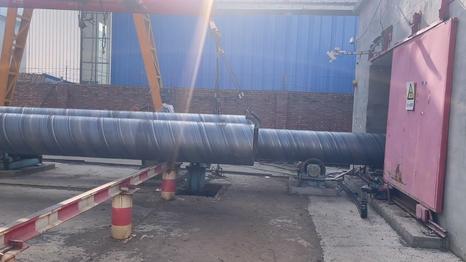
In the vast expanse of industrial manufacturing, the production of large-diameter steel pipes stands as a testament to human ingenuity and technological advancement. These pipes, crucial for oil and gas pipelines, deep-sea exploration, and various mechanical and structural applications, undergo a series of intricate processes that transform flat steel plates into robust, high-performance conduits. This article delves into the heart of this production journey, exploring the battle of precision between JCOE and UOE forming processes, the nuances of welding technologies, and the final touches of post-processing.
1.1 The Battle of Precision: JCOE vs. UOE Forming Processes
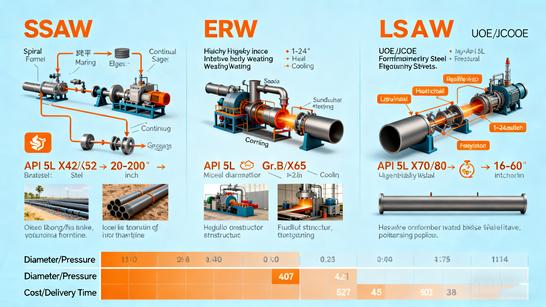
The journey begins with the transformation of a flat steel plate into a cylindrical pipe, a feat achieved through two primary methods: JCOE and UOE. Each method has its unique strengths and applications, making them indispensable in the production of high-quality pipes.
JCOE, an acronym for J-ing, C-ing, O-ing, and Expanding, is a meticulous process that involves bending the steel plate in stages. Initially, the plate is shaped into a J-form, a gentle curve that sets the foundation for subsequent bends. This is followed by a C-shape, a more pronounced curve that brings the edges closer together. The next step is forming an O-shape, where the edges are almost touching, ready for the final expansion. This expansion process is crucial as it ensures the pipe achieves the desired diameter with high dimensional accuracy and minimal residual stress. JCOE pipes are particularly favored in high-pressure applications, such as oil and gas pipelines, where precision and durability are paramount.
On the other hand, UOE, which stands for U-ing, O-ing, and Expanding, takes a slightly different approach. The process starts with the plate being formed into a U-shape, a deeper curve that facilitates the subsequent O-shape formation. The O-shape is achieved by bringing the edges of the U-shaped plate together, creating a near-cylindrical form. Finally, the pipe is expanded to the desired diameter, ensuring excellent roundness and wall thickness uniformity. UOE pipes are renowned for their suitability in demanding environments, such as deep-sea exploration, where the pipes must withstand extreme pressures and corrosive conditions.
1.2 The Heart of the Pipe: Welding Technologies
Once the pipe has been formed, the next critical step is welding, which joins the edges of the steel plate to create a continuous, strong conduit. Two primary welding technologies are employed in this process: High-Frequency Welding (HFW) and Submerged Arc Welding (SAW).
High-Frequency Welding utilizes high-frequency electrical currents to heat and join the edges of the steel strip. This method is fast, efficient, and widely used in producing ERW (Electric Resistance Welded) pipes for mechanical and structural applications. The high-frequency current generates heat at the edges of the steel, causing them to melt and fuse together, forming a strong, continuous weld. HFW is particularly advantageous for its speed and cost-effectiveness, making it a popular choice in mass production settings.
Submerged Arc Welding, on the other hand, involves feeding a continuous wire electrode under a layer of flux. This flux protects the weld from atmospheric contamination, ensuring a clean, high-quality weld. SAW is preferred for thick-walled pipes used in high-pressure scenarios, such as oil and gas pipelines. The process provides excellent mechanical properties, including high strength and ductility, making the pipes capable of withstanding extreme conditions.
1.3 Post-Processing: The Final Touch
After welding, the pipes undergo a series of post-processing steps to ensure they meet the highest standards of quality and performance. Sizing and straightening are crucial processes that ensure the pipes have precise dimensions and are free from bends or distortions. This enhances their structural integrity, making them suitable for a wide range of applications.
Heat treatment is another vital post-processing step that improves the pipe's mechanical properties. Processes like normalizing or quenching and tempering are applied to enhance the pipe's strength and toughness. Normalizing involves heating the pipe to a specific temperature and then cooling it in air, which refines the grain structure and improves the pipe's mechanical properties. Quenching and tempering, on the other hand, involve heating the pipe to a high temperature, rapidly cooling it in water or oil, and then reheating it to a lower temperature. This process increases the pipe's hardness and strength while maintaining its ductility, ensuring it can withstand extreme conditions without failing.
In conclusion, the production of large-diameter steel pipes is a complex and intricate process that involves multiple stages of forming, welding, and post-processing. Each step is crucial in ensuring the pipes meet the highest standards of quality and performance, making them suitable for a wide range of applications, from oil and gas pipelines to deep-sea exploration. By understanding the nuances of JCOE and UOE forming processes, the advantages of HFW and SAW welding technologies, and the importance of post-processing steps like sizing, straightening, and heat treatment, we can appreciate the craftsmanship and technological prowess that goes into producing these essential industrial components.
2. Material Science: Beyond Just "Steel"
In the realm of material science, steel has long been the cornerstone of industrial applications, renowned for its strength, durability, and versatility. However, the landscape of material science extends far beyond the traditional realm of steel, encompassing a diverse array of specialized materials designed to meet specific challenges and applications. This article delves into the nuanced world of steel grades tailored for distinct purposes, strategies to combat corrosion, and emerging materials poised to revolutionize industries.
2.1 Tailored Steel Grades for Specialized Applications
Not all steel is created equal. Different grades of steel are engineered to excel in particular environments and under specific conditions. For instance, API 5L steel stands out as a prime example of material customization. Designed explicitly for the transportation of oil and natural gas, API 5L sets stringent standards for line pipes. These pipes must exhibit not only high strength to withstand the pressures of long-distance transport but also exceptional toughness to resist fractures and cracks that could lead to catastrophic failures. Moreover, resistance to hydrogen-induced cracking (HIC) is crucial, as hydrogen sulfide and other corrosive substances often accompany oil and gas streams, posing a significant threat to pipe integrity over time.
Another notable steel grade is ASTM A106, which finds its niche in high-temperature and high-pressure service scenarios. Industries such as power generation and petrochemicals rely heavily on A106 pipes due to their outstanding tensile strength and creep resistance. Tensile strength ensures that the pipes can withstand the immense forces exerted by the flowing fluids, while creep resistance prevents gradual deformation under prolonged exposure to elevated temperatures, thereby maintaining structural integrity and safety over extended periods.
2.2 Corrosion: The Silent Threat and Its Countermeasures
Corrosion, often referred to as the invisible enemy, poses a significant challenge to the longevity and performance of steel structures. It manifests in two primary forms: internal and external corrosion, each requiring distinct mitigation strategies.
Internal corrosion arises from the presence of water, oxygen, and various contaminants within the pipe system. These elements interact with the steel surface, initiating chemical reactions that gradually erode the material. To combat internal corrosion, internal coatings are applied. Epoxy coatings, for instance, form a protective barrier between the steel and the corrosive substances, preventing direct contact and thus inhibiting the corrosion process. Similarly, cement mortar linings offer excellent resistance to abrasion and chemical attack, extending the service life of the pipes.
External corrosion, on the other hand, is primarily an electrochemical phenomenon exacerbated by soil conditions and moisture. This type of corrosion can be particularly insidious, as it often goes unnoticed until significant damage has occurred. To address external corrosion, a multi-pronged approach is employed. Three-layer polyethylene (3PE) coating is a widely adopted method, providing a robust and durable shield against environmental factors. Additionally, cathodic protection systems are implemented, which involve applying an electrical current to the steel structure to counteract the electrochemical corrosion process, effectively "sacrificing" an anode to protect the cathode (the steel pipe).
2.3 Emerging Materials: Pioneering the Future of Industry
As industries evolve and face increasingly complex challenges, the demand for advanced materials with superior properties grows. Two such materials that are gaining prominence are duplex stainless steel and corrosion-resistant alloys (CRAs).
Duplex stainless steel represents a fusion of the best attributes of austenitic and ferritic stainless steels. By combining these two microstructures, duplex grades offer a unique blend of corrosion resistance and strength. This makes them particularly well-suited for marine environments, where exposure to saltwater and harsh weather conditions can quickly degrade traditional materials. Additionally, duplex stainless steel finds applications in chemical processing, where resistance to a wide range of corrosive substances is essential.
Corrosion-resistant alloys (CRAs) take corrosion resistance to the next level. These alloys are formulated with elements such as chromium, nickel, and molybdenum, which impart exceptional resistance to harsh environments, including sour gas and high-temperature conditions. CRAs are indispensable in industries such as oil and gas exploration, where equipment must withstand extreme pressures, temperatures, and corrosive substances. Their ability to maintain structural integrity and performance under such demanding conditions makes them a critical component in ensuring the safety and efficiency of industrial operations.
In conclusion, the world of material science is a dynamic and ever-evolving field, driven by the need for materials that can meet the diverse and challenging demands of modern industry. From tailored steel grades designed for specific applications to advanced strategies for combating corrosion and the emergence of innovative materials like duplex stainless steel and CRAs, the future of material science promises to be both exciting and transformative. As industries continue to push the boundaries of what is possible, the development and application of these advanced materials will play a pivotal role in shaping the landscape of industrial innovation.
3. Lifecycle Economics: Beyond the Initial Purchase
When it comes to making purchasing decisions, especially for industrial components like pipes, the initial procurement cost often grabs the spotlight. However, in the realm of lifecycle economics, this upfront expense is merely the visible tip of a much larger iceberg. There are numerous hidden expenses and long - term considerations that can significantly impact the overall cost - effectiveness and value of a product.
3.1 Initial Procurement - More Than Just a Price Tag
The initial cost of acquiring pipes is undoubtedly an important factor. But it's far from the only determinant of long - term value. Installation complexity plays a crucial role. Pipes that are difficult to install may require specialized labor, additional equipment, and more time, all of which add to the total cost. For instance, if a particular type of pipe has unique fitting requirements or needs complex welding procedures, the installation expenses can quickly escalate.
Material quality is another key aspect. High - quality materials may have a higher initial price, but they often offer better durability and performance over time. A pipe made from inferior materials might be more prone to corrosion, leaks, or premature failure, leading to costly repairs and replacements down the line.
Supplier reputation also matters. A reputable supplier is more likely to provide reliable products, timely delivery, and good after - sales service. On the other hand, dealing with an unreliable supplier can result in delays, substandard products, and difficulties in getting support when problems arise, all of which can add hidden costs to the project.
3.2 Maintenance and Energy Loss - The Silent Cost Drivers
Regular maintenance is essential for keeping pipes in good working condition. Cleaning and inspection are fundamental maintenance tasks. By regularly cleaning the pipes, one can prevent the buildup of debris, scale, or other contaminants that can restrict flow and increase pressure. Inspection helps identify potential issues early on, such as small cracks or corrosion spots, before they develop into major problems that cause downtime. Downtime can be extremely costly, especially in industrial settings where production is halted, leading to lost revenue and potential penalties for delayed deliveries.
In addition to maintenance, the design of the pipes can have a significant impact on energy consumption. Pipes with smooth interiors minimize friction as fluids flow through them. This reduction in friction means that less energy is required to pump the fluids, resulting in lower energy costs over the lifespan of the pipe system. For example, in a large - scale industrial facility that transports fluids continuously, even a small improvement in energy efficiency can lead to substantial savings over time.
3.3 Maintenance Strategies - A Comparative Look
There are three main maintenance strategies, each with its own advantages and disadvantages. Reactive maintenance involves waiting for a failure to occur before taking any action. While this approach may seem cost - effective in the short term as it avoids regular maintenance expenses, it can lead to costly repairs and significant downtime when a failure does happen. For example, if a pipe bursts unexpectedly, it can cause damage to surrounding equipment, require emergency repairs, and disrupt production for an extended period.
Preventive maintenance takes a more proactive approach. It involves scheduled inspections and replacements based on time or usage intervals. By regularly checking the pipes and replacing worn - out components before they fail, unexpected breakdowns can be prevented. This strategy helps to ensure the continuous operation of the pipe system and reduces the risk of costly downtime. However, it may involve some over - maintenance, as components may be replaced even if they still have some useful life left.
Predictive maintenance is the most advanced of the three strategies. It leverages sensors and data analytics to monitor the condition of the pipes in real - time. By analyzing data such as vibration, temperature, and pressure, potential failures can be predicted before they happen. This allows for maintenance to be scheduled at the most opportune time, optimizing the use of resources and reducing costs. For example, if sensors detect an abnormal vibration in a pipe, it could indicate a developing problem, and maintenance can be carried out before the pipe fails completely.
3.4 Sustainability - The Green Advantages of Steel Pipes
Steel pipes offer several sustainability benefits. One of the most significant is their recyclability. At the end of their useful life, steel pipes can be easily recycled and turned into new products. This reduces waste and conserves natural resources, as less raw steel needs to be mined and processed.
Advances in pipe design also contribute to energy efficiency. Thinner - walled pipes require less material to manufacture, reducing the environmental impact of production. Improved coatings can enhance the corrosion resistance of the pipes, extending their lifespan and reducing the need for frequent replacements. This, in turn, reduces the overall energy consumption and resource use associated with the pipe system.
In conclusion, when considering the purchase of pipes, it's crucial to look beyond the initial procurement cost. By taking into account factors such as installation complexity, material quality, maintenance requirements, energy efficiency, and sustainability, one can make a more informed decision that maximizes long - term value and cost - effectiveness. Our DIN 2440 ERW Black Steel Pipe is designed with all these aspects in mind, offering a reliable and sustainable solution for mechanical and structural applications.
4. Industry Applications: Stories Behind the Pipes
4.1 Energy Sector: Navigating Extreme Conditions
In the vast and challenging realm of the energy sector, pipes play an indispensable role in ensuring the smooth flow of resources and the stability of operations. The energy industry often operates in extreme conditions, and the pipes used must be able to withstand these harsh environments to avoid costly disruptions and potential safety hazards.
When it comes to the oil and gas industry, especially in Arctic projects, the conditions are particularly unforgiving. The sub - zero temperatures can turn ordinary materials brittle, making them prone to cracking and failure. However, our API 5L X65 LSAW Steel Pipe stands out as a reliable solution in such extreme settings. This pipe is engineered with exceptional low - temperature toughness, which means it can maintain its structural integrity even in the coldest of climates. Additionally, it offers excellent resistance to Hydrogen Induced Cracking (HIC), a common problem in oil and gas pipelines where hydrogen can seep into the metal and cause it to crack over time. This combination of properties makes the API 5L X65 LSAW Steel Pipe an ideal choice for Arctic oil and gas exploration and production, ensuring the safe and efficient transportation of valuable resources.
In the realm of renewable energy, offshore wind farms are emerging as a significant source of clean power. These massive structures require large - diameter pipes for their foundation structures to withstand the powerful forces of the ocean. The saltwater environment is highly corrosive, and if not properly protected, the pipes can quickly deteriorate, leading to structural instability. Our EN 10346 DX51D Galvanized Steel Tube provides an effective solution to this problem. The galvanization process creates a protective layer on the surface of the steel tube, preventing the saltwater from coming into direct contact with the metal. This corrosion resistance ensures the long - term durability of the pipes, allowing offshore wind farms to operate reliably for decades.
4.2 Major Projects: Pushing the Limits
The construction of major infrastructure projects is a testament to human ingenuity and engineering prowess. These projects often push the limits of what is possible, and the pipes used in them play a crucial role in their success.
Cross - sea bridges are iconic structures that connect landmasses separated by water. The construction of such bridges, like the Hong Kong - Zhuhai - Macao Bridge, is an extremely complex and challenging task. These bridges require pipes with unparalleled strength and durability to support the weight of the bridge deck and withstand the forces of wind, waves, and traffic. Our BS 1387 ERW Steel Pipe for Water Supply has been instrumental in such projects. Although its primary function is water supply, its robust construction and high - quality materials make it suitable for use in bridge construction as well. The pipe's ability to ensure reliable water transport during the construction process is also essential, as it provides a steady supply of water for various construction activities, such as concrete mixing and dust suppression.
Super high - rise buildings are another marvel of modern architecture. These towering structures not only require strong structural components but also innovative design solutions to meet aesthetic and functional requirements. In buildings like the CCTV Headquarters in Beijing, custom - shaped pipes are used for curtain walls. Curtain walls are non - structural outer coverings of a building that protect it from the elements while also contributing to its overall appearance. The use of custom - shaped steel pipes in curtain walls showcases the versatility and adaptability of steel pipes in architectural applications. These pipes can be manufactured in various shapes and sizes to fit the unique design of the building, providing both structural support and a visually appealing finish.
In addition to the above - mentioned applications, our ASTM A53 Gr.B Hot - Dip Galvanized ERW Steel Pipe also plays a significant role in supporting industrial and outdoor applications. Its hot - dip galvanization provides excellent corrosion resistance, making it suitable for use in environments where exposure to moisture and chemicals is common. Whether it is used in industrial piping systems for transporting fluids or in outdoor structures such as fences and railings, this pipe offers reliable performance and long - lasting durability.
In conclusion, pipes are the unsung heroes of the industry, quietly enabling the smooth operation of various sectors. From the extreme conditions of the energy industry to the grand - scale construction of major projects, the right pipes can make all the difference in ensuring safety, efficiency, and longevity. Our range of steel pipes, with their unique properties and high - quality construction, are designed to meet the diverse needs of different applications, providing reliable solutions for a wide range of industrial challenges.