
Introduction
In the vast and complex world of oil and gas exploration and production, oilfield casing pipes play an indispensable role. These pipes are like the sturdy skeletons that support the entire drilling and production process, facing some of the most extreme conditions imaginable. From the immense pressures deep beneath the Earth's surface to the highly corrosive environments filled with various chemicals and fluids, oilfield casing pipes must be engineered to withstand it all. Our Oilfield Casing Threaded Pipe API 5CT J55/K55 stands as a testament to advanced material science and precise manufacturing, designed to deliver unparalleled performance in even the most challenging oil well casing applications.
1.The Harsh Realities of Oilfield Environments
1.1 High - Pressure Challenges
Deep within the Earth, the pressure increases significantly with depth. Oil and gas reservoirs are often located at great depths where the pressure can reach several thousand pounds per square inch (psi). For example, in some ultra - deep offshore wells, the pressure can exceed 20,000 psi. This immense pressure exerts a tremendous force on the oilfield casing pipes, trying to crush or deform them. If the pipes are not strong enough to withstand this pressure, it can lead to catastrophic failures such as pipe collapse, which can halt production, cause environmental damage, and result in significant financial losses.
1.2 Corrosive Environments
The fluids present in oil and gas wells are highly corrosive. They contain a mixture of hydrocarbons, water, salts (such as chlorides), sulfur compounds (like hydrogen sulfide), and other chemicals. Hydrogen sulfide, in particular, is extremely corrosive and can cause a type of corrosion known as sulfide stress cracking (SSC). This occurs when the metal of the pipe is under stress in the presence of hydrogen sulfide, leading to the formation of cracks that can propagate and cause the pipe to fail. Additionally, the presence of water and salts can lead to electrochemical corrosion, where an electric current is generated between different parts of the pipe, accelerating the corrosion process.
1.3 Temperature Extremes
Oil and gas wells can also experience extreme temperature variations. In some hot oil wells, the temperature can reach several hundred degrees Celsius, while in cold offshore environments, the temperature can drop well below freezing. These temperature changes can cause the metal of the pipe to expand and contract, which can lead to thermal stress and fatigue over time. If the pipe is not designed to handle these temperature extremes, it can develop cracks or other defects that compromise its integrity.
2.Advanced Material Science in Our Oilfield Casing Threaded Pipe API 5CT J55/K55
2.1 Selection of High - Strength Alloys
To combat the high - pressure challenges, our oilfield casing pipes are made from high - strength alloys. The API 5CT J55 and K55 grades are carefully selected for their excellent mechanical properties. These alloys contain a combination of elements such as carbon, manganese, silicon, phosphorus, sulfur, chromium, and molybdenum. The carbon content provides strength and hardness, while the other elements work together to improve the pipe's toughness, ductility, and corrosion resistance.
For example, the addition of chromium and molybdenum enhances the pipe's resistance to pitting and crevice corrosion, which are common in oilfield environments. These elements form a protective oxide layer on the surface of the pipe, preventing the corrosive substances from attacking the underlying metal. The precise control of the alloy composition during the manufacturing process ensures that our pipes have consistent and reliable mechanical properties, enabling them to withstand the high pressures encountered in deep - well drilling.
2.2 Microstructural Engineering
The microstructure of the metal plays a crucial role in determining its mechanical properties. Our manufacturing process involves precise control of the cooling rate during solidification to achieve the desired microstructure. For the API 5CT J55/K55 pipes, a fine - grained ferrite - pearlite microstructure is typically targeted. Fine - grained structures offer several advantages over coarse - grained ones.
Firstly, fine - grained metals have higher strength and toughness. The grain boundaries act as barriers to the movement of dislocations, which are defects in the crystal lattice that are responsible for plastic deformation. This means that more force is required to deform a fine - grained metal, making it stronger. Secondly, fine - grained structures are more resistant to crack propagation. When a crack starts to form, it has to travel through multiple grain boundaries, which slows down its growth and makes the material more ductile. This is especially important in oilfield casing pipes, where the prevention of crack propagation is essential for maintaining the integrity of the well.
2.3 Corrosion - Resistant Coatings
In addition to the inherent corrosion resistance of the alloy, our oilfield casing pipes can also be coated with specialized corrosion - resistant coatings. These coatings provide an extra layer of protection against the harsh corrosive environments in the oilfield. One common type of coating is a fusion - bonded epoxy (FBE) coating. FBE coatings are applied by electrostatic spraying of epoxy powder onto the heated surface of the pipe, followed by curing at high temperatures.
FBE coatings offer excellent adhesion to the pipe surface, forming a continuous and impermeable barrier that prevents the corrosive substances from coming into contact with the metal. They are also resistant to a wide range of chemicals, including acids, alkalis, and salts, making them ideal for oilfield applications. Another type of coating that can be used is a three - layer polyethylene (3LPE) coating, which consists of an epoxy primer layer, an adhesive layer, and a polyethylene outer layer. 3LPE coatings provide long - term corrosion protection and are highly resistant to mechanical damage, ensuring the longevity of the oilfield casing pipes.
3.Precise Welding Techniques for Weld Integrity
3.1 Submerged Arc Welding (SAW)
Welding is a critical process in the manufacturing of oilfield casing pipes, as it joins the individual pipe sections together to form a continuous length. One of the welding techniques commonly used in our production is submerged arc welding (SAW). SAW is a highly efficient and reliable welding method that offers several advantages for oilfield casing pipe manufacturing.
In SAW, the welding arc is submerged beneath a layer of granular flux, which acts as a shielding medium. The flux protects the weld pool from atmospheric contamination, such as oxygen and nitrogen, which can cause defects in the weld. It also helps to stabilize the arc, resulting in a more consistent and high - quality weld. SAW also has a high deposition rate, meaning that it can deposit a large amount of weld metal in a short period, which is important for large - scale production of oilfield casing pipes.
3.2 Laser Welding for Precision and Quality
Another welding technique that we employ is laser welding. Laser welding offers unparalleled precision and control, making it ideal for applications where high - quality welds are required. In laser welding, a highly focused laser beam is used to melt the metal at the joint, creating a narrow and deep weld bead.
The narrow heat - affected zone (HAZ) in laser welding minimizes the thermal stress on the pipe, reducing the risk of distortion and residual stresses. This is especially important for oilfield casing pipes, as excessive distortion can affect the pipe's fit and alignment in the wellbore. Laser welding also allows for the welding of thin - walled pipes with high precision, which is often required in some oilfield applications. Additionally, the high - speed welding capability of laser welding can improve production efficiency and reduce manufacturing costs.
3.3 Weld Inspection and Quality Control
To ensure the integrity of the welds in our oilfield casing pipes, a comprehensive weld inspection and quality control process is implemented. Non - destructive testing (NDT) techniques are used to detect any defects in the welds without damaging the pipes. Some of the common NDT methods used include ultrasonic testing (UT), radiographic testing (RT), and magnetic particle testing (MT).
Ultrasonic testing uses high - frequency sound waves to detect internal defects in the welds, such as cracks, porosity, and inclusions. It can provide detailed information about the size, shape, and location of the defects, allowing for accurate assessment of the weld quality. Radiographic testing involves the use of X - rays or gamma rays to create an image of the weld, which can reveal any internal defects. Magnetic particle testing is used to detect surface and near - surface defects in ferromagnetic materials by applying a magnetic field and sprinkling magnetic particles on the surface. Any defects will cause a leakage of the magnetic field, attracting the particles and forming an indication.
4.Spiral Steel Pipes - Related Keywords and Their Significance
4.1 Spiral Steel Pipes in Oilfield Applications
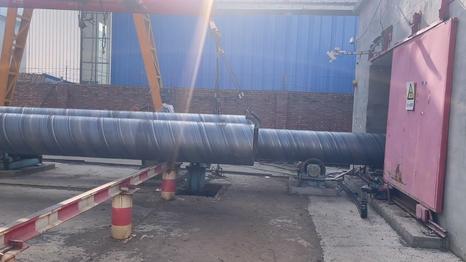
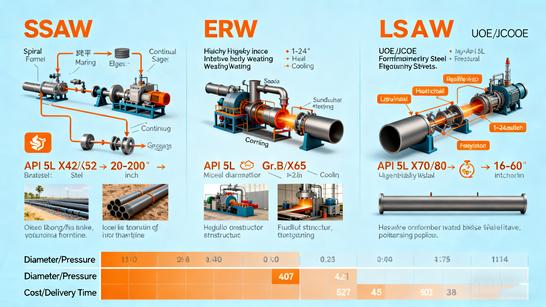
Spiral Welded Oilfield Casing Pipes: These pipes are manufactured by spiral welding, which involves forming a steel strip into a spiral shape and then welding the edges together. Spiral welded oilfield casing pipes offer some advantages in certain applications. They can be produced in larger diameters compared to some other types of pipes, making them suitable for large - diameter wellbores. The spiral welding process also allows for the use of thicker - walled pipes, which can provide additional strength and resistance to high pressures.
Spiral Steel Pipes for Deep - Well Drilling: In deep - well drilling, where the pressure and temperature conditions are extremely severe, spiral steel pipes can be a viable option. Their unique manufacturing process can result in pipes with good mechanical properties and the ability to withstand the harsh environment. The spiral structure can also provide some flexibility, which can be beneficial in dealing with the complex geological conditions encountered in deep wells.
4.2 Material Science and Manufacturing of Spiral Steel Pipes
Advanced Alloys for Spiral Steel Pipes: Similar to our Oilfield Casing Threaded Pipe API 5CT J55/K55, spiral steel pipes used in the oilfield can also be made from advanced alloys. The selection of the alloy is based on the specific requirements of the application, such as the level of pressure, temperature, and corrosion resistance needed. High - strength alloys with good toughness and corrosion resistance are preferred to ensure the long - term performance of the pipes.
Spiral Welding Technology and Quality Control: The quality of the spiral welding is crucial for the integrity of the pipes. Advanced spiral welding technologies, such as high - precision welding machines and automated welding processes, are used to ensure consistent and high - quality welds. Quality control measures, including NDT techniques similar to those used for our threaded pipes, are implemented to detect any defects in the welds and ensure that the pipes meet the required standards.
Conclusion
The oilfield is a challenging environment that demands the highest level of performance from casing pipes. Our Oilfield Casing Threaded Pipe API 5CT J55/K55 is designed and manufactured using advanced material science and precise welding techniques to withstand the extreme conditions of high pressure, corrosion, and temperature variations. By selecting high - strength alloys, engineering the microstructure, applying corrosion - resistant coatings, and using advanced welding methods, we ensure that our pipes deliver unmatched performance in oil well casing applications. Additionally, the understanding of spiral steel pipes and their related aspects in the oilfield further expands the range of options available for meeting the diverse needs of the industry. Whether it's our threaded pipes or spiral steel pipes, we are committed to providing reliable and high - quality solutions for the oil and gas sector.