
Introduction
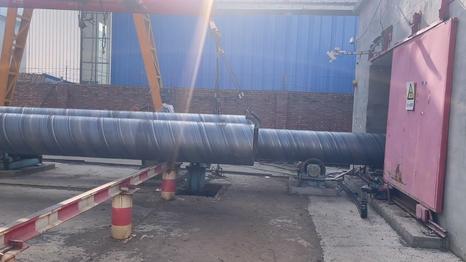
Black iron pipes, renowned for their robustness and versatility, are a staple in industrial and residential applications, from gas lines to structural supports. This article delves into the intricate manufacturing processes, quality control measures, and technological advancements that define the production of these essential components. By exploring the nuances of material selection, forming techniques, and finishing processes, we aim to provide engineers, procurement specialists, and quality control professionals with a comprehensive understanding of what goes into making a reliable black iron pipe.
1. Material Selection: The Foundation of Quality
In the intricate world of black iron pipe manufacturing, material selection stands as the cornerstone upon which the entire production process rests. The choice of raw materials not only dictates the pipe's initial properties but also influences its long-term performance, durability, and suitability for various applications. This section delves into the critical aspects of material selection, emphasizing the importance of high-grade iron ore, the pivotal role of carbon content, the enhancements brought by alloying elements, and the significance of adhering to international quality standards.
1.1 Raw Materials: The Essence of Strength and Ductility
The journey of a black iron pipe begins with the selection of raw materials, primarily iron ore. Not all iron ores are created equal; the quality of the ore significantly impacts the final product's mechanical properties. High-grade iron ore, characterized by its low impurity content and high iron percentage, is the preferred choice for producing pipes that demand superior strength and ductility. Impurities such as sulfur, phosphorus, and certain trace elements can act as stress raisers, reducing the pipe's resistance to fracture and compromising its overall integrity.
Carbon, a fundamental element in steel, plays a dual role in determining the pipe's properties. It is the primary hardening agent, contributing to the pipe's strength and hardness. However, an excessive amount of carbon can make the steel brittle, reducing its ductility and toughness. Therefore, the carbon content must be carefully controlled during the smelting process to strike a balance between strength and ductility. Typically, black iron pipes are made from low-carbon steels, which offer an optimal combination of these properties, making them suitable for a wide range of applications, from gas lines to structural supports.
1.2 Alloying Elements: Enhancing Specific Properties
While carbon is the cornerstone of steel's strength, the addition of small amounts of other elements, known as alloying elements, can significantly enhance specific properties of the black iron pipe. Manganese, for instance, is a common alloying element that improves the steel's hardenability, allowing it to achieve higher strength levels through heat treatment. Additionally, manganese acts as a deoxidizer, removing oxygen from the molten steel and reducing the formation of non-metallic inclusions that can weaken the pipe.
Silicon is another important alloying element that enhances the steel's corrosion resistance. When exposed to oxygen, silicon forms a thin, adherent oxide layer on the pipe's surface, acting as a barrier against further corrosion. This is particularly beneficial in applications where the pipe is exposed to moist or corrosive environments, such as in underground gas lines or in industrial settings where chemicals are present.
Other alloying elements, such as chromium, nickel, and molybdenum, can also be added to the steel to impart specific properties. Chromium, for example, is known for its excellent corrosion resistance and is often used in stainless steels. While black iron pipes may not contain high levels of these elements, small additions can still provide significant benefits in terms of enhancing the pipe's resistance to certain types of corrosion or improving its weldability.
1.3 Quality Standards: Ensuring Consistency and Reliability
Adhering to international quality standards is paramount in the production of black iron pipes. These standards, developed by organizations such as the American Society for Testing and Materials (ASTM), the American Petroleum Institute (API), the European Committee for Standardization (EN), and the British Standards Institution (BS), provide a set of guidelines and specifications that govern the material properties, dimensions, and testing requirements of the pipes.
By following these standards, manufacturers can ensure that their pipes meet the minimum requirements for strength, ductility, corrosion resistance, and other critical properties. This consistency is crucial for ensuring that the pipes perform reliably in their intended applications, reducing the risk of failure and the associated costs and safety hazards.
Moreover, quality standards also facilitate international trade by providing a common language and set of expectations for buyers and sellers. When a manufacturer adheres to a recognized standard, it signals to potential customers that the product has been produced to a high level of quality and has undergone rigorous testing to ensure its performance.
In conclusion, material selection is the foundation upon which the quality of black iron pipes is built. By choosing high-grade iron ore, carefully controlling the carbon content, adding appropriate alloying elements, and adhering to international quality standards, manufacturers can produce pipes that offer superior strength, ductility, corrosion resistance, and weldability. These properties, in turn, ensure that the pipes perform reliably in their intended applications, providing a safe and durable solution for a wide range of industrial and residential needs.
2. Forming Techniques: From Billet to Pipe
The transformation of a solid billet into a functional black iron pipe involves a series of sophisticated forming techniques, each with its unique set of advantages and challenges. This section delves into the intricacies of seamless versus welded pipe manufacturing, as well as the nuances of hot rolling versus cold drawing processes, shedding light on how these methods influence production efficiency, cost, and the mechanical properties of the final product.
2.1 Seamless vs. Welded Pipes: A Comparative Analysis
2.1.1 Seamless Pipes: Precision and Strength
Seamless pipes are crafted from a single piece of solid billet, which is heated and then pierced through the center to create a hollow tube. This process, known as piercing or rotary rolling, ensures that the pipe has no seams or welds, offering superior strength and uniformity. The absence of a weld seam eliminates potential weak points, making seamless pipes ideal for high-pressure applications such as oil and gas transmission lines, where integrity is paramount.
The manufacturing of seamless pipes involves several steps, including heating the billet to a malleable state, piercing it to form a hollow shell, and then elongating and shaping it through a series of rolling mills. This multi-stage process requires precise control over temperature, pressure, and rolling speed to achieve the desired dimensions and mechanical properties. While the initial setup costs for seamless pipe production are high due to the need for specialized equipment, the long-term benefits in terms of product quality and performance justify the investment.
2.1.2 Welded Pipes: Efficiency and Cost-Effectiveness
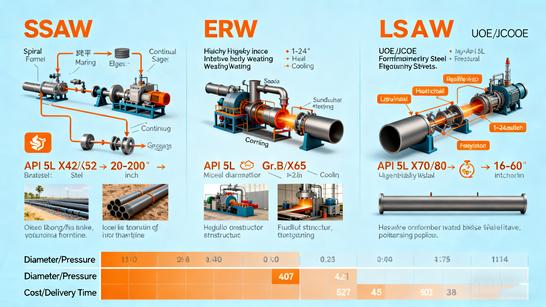
In contrast, welded pipes are produced by rolling a flat strip of steel into a cylindrical shape and then welding the edges together. This method offers several advantages in terms of production efficiency and cost. Welded pipes can be manufactured in a continuous process, allowing for higher output rates and lower labor costs compared to seamless pipes. Additionally, the raw material utilization is typically higher in welded pipe production, as there is less waste generated during the forming process.
However, the presence of a weld seam introduces potential points of weakness, which must be carefully inspected and tested to ensure the pipe's integrity. Modern welding techniques, such as high-frequency induction welding (HFIW) and submerged arc welding (SAW), have significantly improved the quality and reliability of welded pipes, making them suitable for a wide range of applications, including water supply, structural support, and low-pressure gas lines.
2.2 Hot Rolling vs. Cold Drawing: Microstructural and Surface Implications
2.2.1 Hot Rolling: Enhancing Ductility and Formability
Hot rolling is a forming process that involves heating the steel billet or tube to a temperature above its recrystallization point, typically between 1100°C and 1300°C. At these elevated temperatures, the steel becomes more malleable, allowing it to be easily shaped and formed into the desired pipe dimensions. Hot rolling not only improves the ductility and formability of the steel but also helps to refine its grain structure, resulting in enhanced mechanical properties such as strength and toughness.
One of the key advantages of hot rolling is its ability to produce pipes with a relatively smooth surface finish, which is beneficial for applications where corrosion resistance is important. However, the high temperatures involved in hot rolling can lead to surface oxidation and scaling, which may require additional processing steps such as pickling or descaling to remove.
2.2.2 Cold Drawing: Achieving Precision and Surface Excellence
Cold drawing, on the other hand, is a process that involves pulling a pre-formed tube through a die at room temperature or slightly above. This method allows for precise control over the pipe's dimensions, resulting in excellent dimensional accuracy and a superior surface finish. Cold drawing also induces work hardening in the steel, increasing its strength and hardness while reducing its ductility.
The cold drawing process is particularly well-suited for producing pipes with tight tolerances and complex shapes, such as those required for hydraulic systems or precision instrumentation. Additionally, the absence of high temperatures during cold drawing eliminates the risk of surface oxidation and scaling, resulting in a cleaner, more corrosion-resistant surface. However, the work hardening effect of cold drawing can make the steel more brittle, necessitating careful heat treatment to restore its ductility and toughness if required.
In conclusion, the choice between seamless and welded pipes, as well as hot rolling and cold drawing processes, depends on a variety of factors including application requirements, production efficiency, cost considerations, and desired mechanical properties. By understanding the nuances of each forming technique, manufacturers can optimize their production processes to produce high-quality black iron pipes that meet the diverse needs of their customers.
3. Heat Treatment: Transforming Properties
Heat treatment stands as a cornerstone in the manufacturing of black iron pipes, a process that meticulously alters the microstructure of the metal to achieve desired mechanical properties. This transformation is not merely a superficial change but a profound reconfiguration at the atomic level, which significantly influences the pipe's strength, ductility, toughness, and corrosion resistance. In this section, we delve into three primary heat treatment processes—normalizing, quenching and tempering, and annealing—each playing a pivotal role in defining the final characteristics of black iron pipes.
3.1 Normalizing: Refining Grain Structure and Relieving Stresses
Normalizing is a heat treatment process that involves heating the black iron pipe to a temperature above its critical range, holding it there for a sufficient period to ensure uniform heating throughout the cross-section, and then cooling it in air. This process is designed to refine the grain structure of the metal, which is crucial for enhancing its mechanical properties.
During normalizing, the large, coarse grains present in the as-rolled or as-forged pipe are transformed into smaller, more uniform grains. This refinement occurs because the high temperature allows for the dissolution of carbides and other precipitates, which then re-precipitate during cooling, forming new, finer grains. The result is a pipe with improved strength, as finer grains resist dislocation movement more effectively, and enhanced toughness, as the uniform grain structure reduces the likelihood of crack propagation.
Moreover, normalizing also serves to relieve internal stresses that may have accumulated during previous manufacturing processes, such as rolling or welding. These stresses, if left unaddressed, can lead to premature failure under load or during service. By normalizing the pipe, manufacturers ensure that it is free from these detrimental stresses, thereby enhancing its overall reliability and longevity.
3.2 Quenching and Tempering: Achieving High Hardness and Balanced Strength-Toughness
Quenching and tempering is a two-step heat treatment process that is employed to achieve a combination of high hardness and balanced strength-toughness in black iron pipes. This process is particularly important for applications where the pipe must withstand high pressures, impacts, or abrasive wear.
Quenching involves heating the pipe to a temperature above its critical range and then rapidly cooling it in a quenching medium, such as water, oil, or polymer. The rapid cooling rate causes the austenite in the pipe to transform into martensite, a hard, brittle phase with a high degree of internal stress. While martensite provides excellent hardness and wear resistance, its brittleness makes it unsuitable for most applications without further treatment.
This is where tempering comes into play. Tempering is a subsequent heat treatment step where the quenched pipe is reheated to a temperature below its critical range and held there for a specified period before cooling. This process reduces the brittleness of the martensite by allowing some of the internal stresses to relax and by precipitating fine carbides throughout the matrix. The result is a pipe with a balanced combination of strength and toughness, making it suitable for a wide range of demanding applications.
3.3 Annealing: Reducing Hardness, Improving Ductility, and Facilitating Further Processing
Annealing is a heat treatment process that is primarily used to reduce the hardness of black iron pipes, improve their ductility, and facilitate further processing, such as threading or bending. This process is particularly important for pipes that need to be formed or machined after heat treatment.
During annealing, the pipe is heated to a temperature below its critical range but high enough to allow for the relaxation of internal stresses and the recrystallization of the deformed grains. The pipe is then held at this temperature for a sufficient period to ensure uniform heating throughout the cross-section before cooling it slowly, often in a furnace.
The slow cooling rate during annealing allows for the formation of new, strain-free grains, which replace the deformed grains present in the as-rolled or as-forged pipe. This recrystallization process reduces the hardness of the pipe, making it easier to machine or form without cracking or tearing. Additionally, the improved ductility achieved through annealing ensures that the pipe can withstand further processing without sustaining damage.
In conclusion, heat treatment is a vital process in the manufacturing of black iron pipes, enabling manufacturers to tailor the mechanical properties of the metal to meet specific application requirements. By understanding and applying normalizing, quenching and tempering, and annealing processes, manufacturers can produce pipes with enhanced strength, ductility, toughness, and corrosion resistance, ensuring their reliability and longevity in service.
4. Finishing Processes: Enhancing Durability and Functionality
Finishing processes are the final touches applied to black iron pipes, playing a crucial role in enhancing their durability, functionality, and aesthetic appeal. These processes not only protect the pipes from environmental degradation but also ensure they meet specific performance requirements for various applications. In this section, we will delve into three key finishing processes: galvanization, black coating, and threading and coupling, each contributing uniquely to the overall quality and utility of black iron pipes.
4.1 Galvanization: A Shield Against Corrosion
Galvanization, particularly hot-dip galvanization, is a widely adopted finishing process for black iron pipes, renowned for its ability to provide a robust, corrosion-resistant coating. This process involves immersing the cleaned and pre-treated pipe into a bath of molten zinc, where a metallurgical reaction occurs between the iron in the pipe and the zinc, forming a series of zinc-iron alloy layers. These layers, topped with a pure zinc coating, create a barrier that effectively shields the underlying metal from corrosive elements such as moisture, oxygen, and chemicals.
The benefits of hot-dip galvanization are manifold. Firstly, it significantly extends the service life of the pipe, especially in harsh environments where corrosion is a prevalent concern. The zinc coating acts as a sacrificial anode, corroding preferentially to the iron, thereby protecting the pipe even if the coating is scratched or damaged. This self-healing property ensures long-term corrosion resistance, reducing maintenance costs and enhancing reliability.
Secondly, galvanization provides excellent adhesion between the coating and the substrate, ensuring the coating remains intact even under mechanical stress or thermal expansion and contraction. This durability makes galvanized pipes suitable for a wide range of applications, including outdoor installations, underground piping systems, and industrial settings where exposure to corrosive substances is common.
Lastly, galvanization is a cost-effective solution compared to other corrosion protection methods, such as painting or epoxy coating, which require regular maintenance and reapplication. The initial investment in galvanization pays off over time through reduced maintenance and replacement costs, making it an economically viable choice for long-term projects.
4.2 Black Coating: Aesthetic Appeal with Functional Benefits
Black coating is another popular finishing process for black iron pipes, primarily used to protect the pipe from oxidation while maintaining a visually appealing finish. This coating is typically composed of a blend of oils, waxes, and sometimes additives like zinc or aluminum flakes, which together form a thin, protective film on the surface of the pipe.
The primary purpose of black coating is to prevent rust and corrosion by creating a barrier that inhibits the contact between the metal and oxygen or moisture in the environment. Unlike galvanization, which provides a thick, metallic coating, black coating offers a more subtle, matte finish that is often preferred for aesthetic reasons, particularly in architectural or decorative applications.
The composition of black coating can vary depending on the specific requirements of the application. For instance, some coatings may include anti-corrosive pigments to enhance their protective properties, while others may incorporate lubricants to facilitate easier installation or bending of the pipe. The choice of coating depends on factors such as the expected exposure conditions, the desired appearance, and the ease of application and maintenance.
Black coating not only protects the pipe but also improves its handling characteristics. The smooth, slippery surface reduces friction during installation, making it easier to slide the pipe into fittings or through walls. Additionally, the coating can help mask minor surface imperfections, providing a more uniform and professional-looking finish.
4.3 Threading and Coupling: Precision for Leak-Free Connections
Threading and coupling are essential finishing processes that ensure black iron pipes can be securely and leak-free connected to form a continuous piping system. Threading involves cutting a helical ridge into the end of the pipe, allowing it to be screwed into a corresponding fitting or coupling. This process requires high precision to ensure the threads are properly formed and aligned, as any deviation can lead to leaks or difficulty in assembly.
The importance of compatible couplings cannot be overstated. Couplings are designed to match the threads on the pipe, providing a tight, secure connection that prevents the escape of fluids or gases. The choice of coupling depends on factors such as the pipe size, material, and the intended application. For instance, some couplings may incorporate gaskets or seals to enhance their leak-proof properties, while others may be designed for easy disassembly and reassembly.
Precision in threading and coupling is critical for the overall performance of the piping system. A poorly threaded pipe or an incompatible coupling can result in leaks, which not only waste resources but also pose safety hazards, particularly in applications involving hazardous substances or high pressures. Therefore, manufacturers employ advanced threading machines and rigorous quality control measures to ensure each pipe meets the required standards for thread accuracy and compatibility.
In conclusion, finishing processes such as galvanization, black coating, and threading and coupling are vital for enhancing the durability, functionality, and aesthetic appeal of black iron pipes. These processes not only protect the pipes from environmental degradation but also ensure they can be securely and efficiently connected to form reliable piping systems. By understanding and applying these finishing techniques, manufacturers can produce high-quality pipes that meet the diverse needs of various industries and applications.
5. Quality Control: Ensuring Perfection
In the production of black iron pipes, quality control stands as the final yet most critical barrier to guaranteeing that every piece of pipe leaving the factory meets the highest standards of performance, safety, and reliability. This process encompasses a range of techniques and practices designed to detect and rectify any defects or deviations from specified parameters, ensuring that the pipes are fit for their intended purpose. Among these, non-destructive testing and dimensional inspection emerge as two cornerstone methods, each playing a pivotal role in upholding the integrity of the final product.
5.1 Non-Destructive Testing: Detecting Internal Defects Without Damage
Non-destructive testing (NDT) is a group of inspection techniques used to evaluate the properties of a material, component, or system without causing damage. In the context of black iron pipe manufacturing, NDT is indispensable for identifying internal defects such as cracks, inclusions, porosity, or wall thickness variations that could compromise the pipe's structural integrity or performance under pressure. Two of the most widely employed NDT methods in this industry are ultrasonic testing and eddy current inspection.
(1)Ultrasonic Testing (UT):
Ultrasonic testing utilizes high-frequency sound waves to inspect the internal structure of the pipe. A transducer generates ultrasonic pulses that travel through the pipe wall and reflect back from any internal discontinuities or the far wall. The reflected signals are captured by the transducer and converted into electrical signals, which are then displayed on a screen as a waveform or image. By analyzing these signals, inspectors can determine the location, size, and nature of any defects present within the pipe. UT is highly sensitive and can detect even minute flaws, making it an invaluable tool for ensuring the internal quality of black iron pipes.
(2)Eddy Current Inspection:
Eddy current inspection is another powerful NDT technique that relies on the principle of electromagnetic induction to detect surface and near-surface defects in conductive materials like black iron. An alternating current is passed through a coil, generating a magnetic field that induces eddy currents in the pipe wall. These eddy currents, in turn, create their own magnetic fields, which interact with the original field. Any discontinuities or variations in the pipe's conductivity, such as cracks or changes in wall thickness, will disrupt the eddy current flow, causing a change in the magnetic field that can be detected by the inspection equipment. Eddy current inspection is particularly effective for detecting surface-breaking defects and is often used in conjunction with other NDT methods for comprehensive quality control.
5.2 Dimensional Inspection: Precision in Measurements for Compatibility and Compliance
While NDT focuses on the internal integrity of the pipe, dimensional inspection ensures that the pipe's physical dimensions—such as diameter, wall thickness, length, and straightness—adhere strictly to the specified tolerances. Precise measurements are crucial for several reasons. Firstly, they guarantee compatibility with fittings, valves, and other components in the piping system, ensuring a leak-tight connection and smooth flow of fluids. Secondly, adherence to dimensional specifications is essential for meeting regulatory requirements and industry standards, which often dictate strict limits on pipe dimensions to ensure safety and performance.
Dimensional inspection typically involves the use of specialized measuring tools and equipment, such as calipers, micrometers, laser scanners, and coordinate measuring machines (CMMs). These tools enable inspectors to take accurate measurements of the pipe's various dimensions and compare them against the specified values. Any deviations beyond the acceptable tolerances are flagged for further investigation or correction, ensuring that only pipes that meet the exacting standards are approved for shipment.
Moreover, dimensional inspection is not a one-time process but is integrated throughout the manufacturing cycle. It begins with the inspection of raw materials to ensure they meet the required specifications before being used in production. During fabrication, regular checks are conducted to monitor the pipe's dimensions and make adjustments as necessary. Finally, a final dimensional inspection is performed before packaging and shipping to verify that the pipe has maintained its dimensional accuracy throughout the manufacturing process.
In conclusion, quality control in black iron pipe manufacturing is a multifaceted endeavor that requires a combination of advanced inspection techniques and rigorous measurement practices. Non-destructive testing methods like ultrasonic testing and eddy current inspection provide a window into the pipe's internal structure, allowing for the detection of hidden defects that could compromise its integrity. Meanwhile, dimensional inspection ensures that every pipe meets the precise physical requirements necessary for compatibility and compliance with industry standards. Together, these quality control measures form the bedrock of a manufacturing process that is committed to delivering perfection in every pipe produced.
Conclusion
The production of black iron pipes is a complex interplay of material science, engineering precision, and quality control. By understanding the intricacies of each manufacturing stage, professionals can make informed decisions, ensuring the selection of pipes that meet the highest standards of performance and reliability.