
Introduction
In the vast realm of construction and industrial applications, pipes play a pivotal role. Whether it's for transporting fluids, gases, or providing structural support, the choice between welded and seamless pipes is crucial. This comprehensive guide delves into the nuances of welded black pipes, spiral welded steel pipes, welded pipe handrail fittings, and the comparison between seamless and welded pipes, providing insights that will aid in making informed decisions for your projects.
1.Welded Black Pipe: Basics and Applications
Welded black pipes, with their characteristic dark, uncoated surface, are a fundamental element in numerous industrial and construction settings. Their widespread use is a testament to their versatility, durability, and cost-effectiveness. These pipes are created through a specific manufacturing process that involves welding steel sheets or strips together to form a continuous length, ensuring a strong and reliable structure.【Link to Exploring the World of Welded Black Pipes】
1.1 Manufacturing Process
The creation of welded black pipes begins with the selection of high-quality steel sheets or strips. These raw materials are chosen for their strength, ductility, and ability to withstand various environmental conditions. Once the steel is procured, it undergoes a series of preparatory steps, including cleaning and straightening, to ensure that the surfaces to be welded are free from contaminants and deformations.
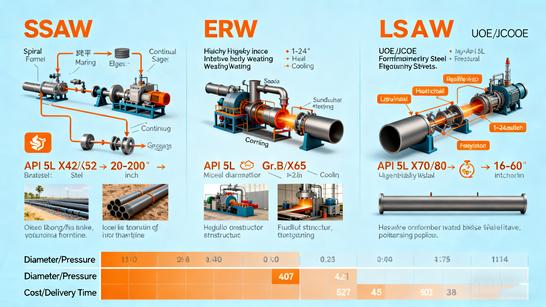
The welding process itself is crucial in determining the quality and integrity of the final product. Two of the most commonly used welding techniques for producing black pipes are electric resistance welding (ERW) and submerged arc welding (SAW).
Electric Resistance Welding (ERW): This method involves passing an electric current through the steel sheets or strips, generating heat at the contact points. The heat causes the edges of the steel to melt and fuse together, forming a strong bond. ERW is known for its speed and efficiency, making it suitable for large-scale production. The resulting welds are generally smooth and uniform, contributing to the overall strength and reliability of the pipe.
Submerged Arc Welding (SAW): In this process, the welding arc is submerged beneath a layer of granular flux, which protects the weld from atmospheric contamination and helps to stabilize the arc. SAW produces deep penetration welds with excellent mechanical properties, making it ideal for applications that require high strength and durability. Although SAW is slower than ERW, it is often preferred for producing pipes that will be subjected to heavy loads or harsh environmental conditions.
After the welding process is complete, the pipes undergo a series of finishing operations, including sizing, straightening, and testing. Sizing ensures that the pipes meet the specified dimensions and tolerances, while straightening corrects any minor deformations that may have occurred during welding. Testing, such as hydrostatic testing, is conducted to verify the integrity of the welds and the overall strength of the pipes.
1.2 Applications
Welded black pipes find extensive use in a variety of applications, thanks to their cost-effectiveness, ease of installation, and versatility. Some of the most common applications include:
1.2.1 Low-Pressure Fluid Transportation
One of the primary uses of welded black pipes is in the transportation of low-pressure fluids, such as water, gas, and air. These pipes are widely employed in municipal water supply systems, where they are used to distribute clean drinking water to homes and businesses. Their corrosion-resistant properties, combined with their ability to withstand moderate pressures, make them suitable for this critical application.
In addition to water supply, black pipes are also used in gas distribution systems. Natural gas, propane, and other gases are transported through these pipes to residential, commercial, and industrial users. The pipes' strength and durability ensure that the gases are delivered safely and efficiently, without the risk of leaks or failures.
1.2.2 Scaffolding
Welded black pipes are a popular choice for scaffolding systems due to their strength, ease of handling, and cost-effectiveness. Scaffolding is essential in construction and maintenance projects, providing a safe and stable platform for workers to perform their tasks at elevated heights. The pipes' ability to be easily assembled and disassembled makes them ideal for temporary structures, while their durability ensures that they can withstand the rigors of repeated use.
1.2.3 Fencing
Another common application of welded black pipes is in fencing systems. These pipes are used to construct sturdy and secure fences around residential properties, commercial buildings, and industrial sites. The pipes' strength and resistance to bending and breaking make them an effective barrier against intruders and animals. Additionally, their dark, uncoated surface provides a sleek and modern appearance that complements a variety of architectural styles.
1.2.4 General Structural Applications
Welded black pipes are also widely used in general structural applications, such as the construction of buildings, bridges, and other infrastructure projects. Their high strength-to-weight ratio makes them an efficient choice for supporting heavy loads, while their ease of fabrication and installation reduces construction time and costs. The pipes can be cut, bent, and welded into various shapes and sizes to meet the specific requirements of each project.
1.3 Advantages
The popularity of welded black pipes can be attributed to several key advantages:
Cost-Efficiency: Welded black pipes are generally more cost-effective than other types of pipes, such as seamless pipes or pipes made from alternative materials like copper or stainless steel. Their lower production costs and widespread availability make them an attractive option for budget-conscious projects.
Availability in Various Sizes: These pipes are available in a wide range of sizes, from small diameters suitable for residential plumbing to large diameters used in industrial applications. This versatility allows designers and engineers to select the most appropriate pipe size for their specific needs, ensuring optimal performance and efficiency.
Ease of Fabrication and Installation: Welded black pipes are relatively easy to fabricate and install, thanks to their uniform shape and consistent quality. They can be cut to length, threaded, and connected using standard fittings, reducing the need for specialized tools or skills. This ease of installation translates to faster project completion times and lower labor costs.
Durability and Strength: The welding process used to produce black pipes results in a strong and durable product that can withstand a variety of environmental conditions and loads. The pipes' resistance to corrosion and wear ensures a long service life, reducing the need for frequent replacements or repairs.
2.Spiral Welded Steel Pipe: Strength and Versatility
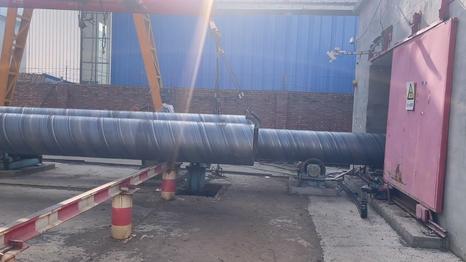
Spiral welded steel pipes are a remarkable engineering marvel that have revolutionized the way we approach various infrastructure and industrial projects. Manufactured through a distinctive process of spirally winding a steel strip and then welding the edges together, these pipes possess a helical seam that sets them apart from other types of pipes. This unique manufacturing method endows spiral welded steel pipes with a host of advantages, making them highly sought after in a wide range of applications.【Link to Spiral Welded Steel Pipes: The Backbone of Large-Diameter Projects】
2.1 Manufacturing Process Insights
The production of spiral welded steel pipes begins with the selection of high - quality steel strips. These strips are carefully inspected for any defects or irregularities to ensure the final product meets stringent quality standards. Once the steel strips are deemed suitable, they are fed into a specialized machine that begins the spiral winding process.
As the steel strip is wound around a mandrel in a helical pattern, precise control is maintained over the angle of winding and the tension applied. This is crucial as it directly impacts the pipe's properties, such as its strength and dimensional accuracy. After the desired length of the pipe is wound, the edges of the steel strip are brought together and welded. The welding process is typically carried out using advanced techniques like submerged arc welding (SAW), which provides a strong, uniform weld that can withstand high pressures and stresses.
The helical seam formed during the manufacturing process is a key characteristic of spiral welded steel pipes. Unlike straight - seam pipes, the helical seam distributes stress more evenly along the length of the pipe. This means that the pipe can better handle external forces, such as those exerted by the soil in underground installations or the weight of the fluid it carries. Additionally, the manufacturing process allows for the production of pipes in a wide range of diameters and wall thicknesses, making them highly versatile for different applications.
2.2 Applications in Oil and Gas Pipelines
One of the most prominent applications of spiral welded steel pipes is in the oil and gas industry. These pipes are ideal for constructing large - diameter pipelines that transport crude oil, natural gas, and other petroleum products over long distances. The high strength - to - weight ratio of spiral welded steel pipes is a significant advantage in this context. It allows for the construction of pipelines that can withstand the high internal pressures generated by the flowing fluids without requiring excessive amounts of material, thus reducing costs.
Moreover, the excellent resistance to internal pressures ensures the integrity of the pipeline over time, minimizing the risk of leaks or ruptures. This is especially important in the oil and gas industry, where any leakage can have severe environmental and economic consequences. Spiral welded steel pipes are also capable of withstanding the harsh environmental conditions often encountered in oil and gas fields, such as extreme temperatures, corrosive substances, and mechanical stresses.
In addition to main transmission pipelines, spiral welded steel pipes are also used in the construction of gathering lines, which collect oil and gas from multiple wells and transport them to a central processing facility. Their versatility in terms of diameter and wall thickness allows them to be tailored to the specific requirements of each gathering system, ensuring efficient and reliable operation.
2.3 Water Transmission Applications
Another major area where spiral welded steel pipes shine is in water transmission. Whether it's for municipal water supply systems, irrigation projects, or industrial water distribution, these pipes offer a reliable and cost - effective solution. The large - diameter capabilities of spiral welded steel pipes make them well - suited for transporting large volumes of water over long distances.
In municipal water supply systems, spiral welded steel pipes are used to convey water from treatment plants to distribution networks. Their strength and durability ensure that the water is delivered safely and efficiently to consumers. The pipes' resistance to internal pressures is crucial in maintaining a consistent water flow, even under high - demand conditions.
For irrigation projects, spiral welded steel pipes can be used to distribute water to agricultural fields. Their ability to withstand the pressure required to pump water over large areas makes them an ideal choice. Additionally, the pipes' long - lasting nature reduces the need for frequent replacements, saving farmers time and money in the long run. In industrial settings, spiral welded steel pipes are used to transport water for cooling, processing, and other purposes. Their robust construction can handle the demands of industrial operations, ensuring a continuous supply of water.
2.4 Structural Applications in Bridges and Piers
Spiral welded steel pipes also find extensive use in structural applications, particularly in the construction of bridges and piers. Their high strength and ability to withstand heavy loads make them an excellent choice for these critical infrastructure projects. In bridge construction, spiral welded steel pipes can be used as piles or columns to support the bridge deck. The pipes' helical seam provides additional strength and stability, allowing them to transfer the loads from the bridge to the foundation effectively.
For piers, spiral welded steel pipes can be used to form the main structural elements. Their large - diameter and high - strength properties enable them to withstand the forces exerted by water currents, waves, and other environmental factors. The pipes can also be filled with concrete to further enhance their strength and durability, creating a composite structure that is highly resistant to deformation and damage.
In addition to their structural integrity, spiral welded steel pipes offer other advantages in bridge and pier construction. Their relatively lightweight nature compared to solid steel sections reduces the overall weight of the structure, which can lead to cost savings in terms of foundation design and construction. The pipes' ease of installation also speeds up the construction process, reducing labor costs and project timelines.
3.Welded Pipe Handrail Fittings: Safety and Aesthetics
Handrail fittings play a crucial role in staircases, balconies, and walkways, serving as both functional safety features and aesthetic enhancements. Among the various types available, welded pipe handrail fittings stand out due to their robust construction and versatile design capabilities. Made by skillfully welding different components together, these fittings provide a blend of strength, durability, and customization that makes them ideal for a wide range of environments.【Link to Welded Pipe Handrail Fittings: Enhancing Safety and Aesthetics】
3.1 Applications
3.1.1 Residential Buildings
In residential settings, welded pipe handrail fittings are commonly found in staircases, both indoors and outdoors. They offer residents a secure grip while ascending or descending stairs, which is particularly important for children, the elderly, and individuals with mobility issues. The customizable nature of these fittings allows homeowners to match the handrail design with the interior decor, creating a cohesive and visually appealing look. For example, in a modern home, sleek, minimalist handrail fittings can complement the clean lines and contemporary aesthetic, while in a more traditional setting, ornate fittings can add a touch of elegance and sophistication.
Balconies in residential buildings also benefit from welded pipe handrail fittings. These fittings provide a barrier that prevents accidental falls, ensuring the safety of occupants, especially those with young children or pets. The ability to customize the design means that the handrails can be tailored to the specific style of the balcony, whether it's a small, cozy space or a large, open area. Additionally, welded pipe handrail fittings are often used in walkways around residential complexes, such as those leading to parking areas or communal gardens, providing a safe and well-defined path for residents to follow.
3.1.2 Commercial Buildings
In commercial buildings, such as office complexes, shopping malls, and hotels, welded pipe handrail fittings are essential for ensuring the safety of employees, customers, and visitors. Staircases in these buildings are often high-traffic areas, and a sturdy handrail is crucial for preventing accidents. The durability of welded pipe fittings means they can withstand the constant use and potential impacts without compromising their structural integrity.
Moreover, commercial buildings often have unique architectural designs, and welded pipe handrail fittings can be customized to fit these designs seamlessly. For instance, in a shopping mall with a grand atrium, the handrail fittings can be designed to match the overall theme of the space, enhancing the visual appeal and creating a memorable experience for shoppers. In hotels, handrail fittings can be used to add a touch of luxury and elegance to staircases and balconies, contributing to the overall ambiance of the establishment.
3.1.3 Industrial Facilities
Industrial facilities, such as factories, warehouses, and manufacturing plants, have specific safety requirements due to the nature of the work being carried out. Welded pipe handrail fittings are ideal for these environments as they can withstand harsh conditions, including exposure to chemicals, extreme temperatures, and heavy machinery. The strong and durable construction of these fittings ensures that they provide reliable safety barriers in areas where workers need to move around safely, such as along walkways, staircases, and mezzanine levels.
In addition to their safety benefits, welded pipe handrail fittings can also be designed to meet the functional needs of industrial facilities. For example, they can be fitted with additional components, such as gates or barriers, to control access to certain areas or to prevent unauthorized entry. The customization options available mean that the handrail fittings can be tailored to the specific layout and requirements of the facility, ensuring optimal safety and functionality.
3.1.4 Public Spaces
Public spaces, such as parks, plazas, and transportation hubs, also rely on welded pipe handrail fittings to ensure the safety of the public. In parks, handrail fittings are used on staircases leading to elevated viewing platforms or along walkways that traverse uneven terrain, providing a secure grip for visitors. In plazas, they can be used to create defined boundaries around fountains or other attractions, preventing accidental falls into the water or onto hard surfaces.
Transportation hubs, such as train stations and airports, have high volumes of foot traffic, and welded pipe handrail fittings play a vital role in guiding passengers safely through the space. They can be used on staircases, escalators, and moving walkways, providing a consistent and reliable safety feature that helps to prevent accidents and injuries. The customizable nature of these fittings means that they can be designed to match the branding or architectural style of the transportation hub, creating a cohesive and visually appealing environment for passengers.
3.2 Advantages
3.2.1 Strong and Durable
One of the primary advantages of welded pipe handrail fittings is their strength and durability. The welding process creates a seamless bond between the different components, resulting in a fitting that is highly resistant to bending, breaking, or cracking. This makes them ideal for use in environments where they will be subjected to heavy use or potential impacts, such as industrial facilities or high-traffic commercial buildings. Additionally, the materials used in welded pipe handrail fittings, such as steel or aluminum, are known for their longevity and ability to withstand the elements, ensuring that the fittings will last for many years without requiring frequent replacement.
3.2.2 Customizable to Fit Specific Designs
Another significant advantage of welded pipe handrail fittings is their high degree of customization. Unlike pre-fabricated handrail fittings, which may have limited design options, welded pipe fittings can be tailored to meet the specific requirements of a project. This means that architects and designers have the freedom to create unique and innovative handrail designs that complement the overall aesthetic of a building or space. Whether it's a simple, straight handrail or a complex, curved design, welded pipe fittings can be fabricated to fit the exact dimensions and shape needed, resulting in a truly bespoke solution.
3.2.3 Easy to Install and Maintain
Welded pipe handrail fittings are also relatively easy to install and maintain. The modular nature of these fittings means that they can be quickly and easily assembled on-site, reducing installation time and costs. Additionally, the smooth, seamless surface of welded pipe fittings makes them easy to clean and maintain, requiring only regular wiping down to remove dirt and debris. This is particularly important in public spaces and commercial buildings, where hygiene and cleanliness are essential for the health and safety of occupants.
4.Seamless vs. Welded Pipe: A Detailed Comparison
The debate between seamless and welded pipes is a long - standing one in the piping industry, with each type boasting its own unique set of advantages and finding specific applications based on these characteristics. Understanding the differences between them is crucial for selecting the right pipe for a particular project.【Link to Seamless vs. Welded Pipes: Making the Right Choice for Your Project】
4.1 Manufacturing Process
Seamless pipes are crafted through a rather intricate process. It all starts with solid billets, which are essentially cylindrical pieces of steel. These billets are first heated to a high temperature to make them malleable. Then, they are extruded, a process where the heated billet is forced through a die to form a hollow tube. This hollow tube still needs to be refined to reach the desired size and shape, so it is then rolled. The rolling process involves passing the tube through a series of rollers that gradually reduce its diameter and wall thickness, giving it the precise dimensions required for the final product. This multi - step process ensures a uniform cross - section throughout the length of the pipe, without any seams.
On the other hand, welded pipes are formed in a different way. As previously mentioned, they are created by welding steel sheets or strips. The process begins with flat steel sheets or strips that are cut to the appropriate length and width. These pieces are then shaped into a cylindrical form, either by rolling or forming machines. Once in a cylindrical shape, the edges of the steel are brought together and welded using techniques such as electric resistance welding (ERW) or submerged arc welding (SAW). ERW involves passing an electric current through the edges of the steel, generating heat that melts and fuses them together. SAW, on the other hand, uses an arc between a continuously fed electrode and the workpiece, with a layer of flux protecting the weld from atmospheric contamination. After welding, the pipe may undergo further processing, such as sizing and straightening, to ensure it meets the required standards.
4.2 Strength and Durability
Seamless pipes generally have an edge when it comes to strength and durability. The absence of a weld seam means there are no weak points along the length of the pipe. In high - pressure applications, where the pipe is subjected to significant internal forces, this seamless construction provides a more reliable and robust structure. For example, in oil and gas exploration, where pipes are used to transport fluids under extremely high pressures deep underground, seamless pipes are often the preferred choice as they can withstand the immense stress without the risk of the weld seam failing.
Welded pipes, while strong, do have a potential weak point at the weld seam. However, it's important to note that modern welding techniques have significantly improved the integrity of welded pipes. Advanced welding processes, along with strict quality control measures during manufacturing, ensure that the weld seams are of high quality and can withstand a considerable amount of pressure. In many low - to medium - pressure applications, such as water supply systems in buildings, welded pipes perform perfectly well and offer a cost - effective solution.
4.3 Cost
Cost is a major factor that influences the choice between seamless and welded pipes. Welded pipes are typically more cost - effective, especially for larger diameters. The manufacturing process of welded pipes is less complex compared to seamless pipes. Since they start with flat steel sheets or strips, there is less material wastage during production. In contrast, the process of making seamless pipes from solid billets involves more steps and a higher amount of raw material usage, which drives up the cost. For large - scale projects where a large quantity of pipes is required, choosing welded pipes can lead to significant cost savings without compromising on the overall functionality in many cases.
4.4 Applications
Seamless pipes are the go - to option for high - pressure and high - temperature applications. In addition to oil and gas exploration, they are widely used in boiler tubes. Boilers operate under high pressure and temperature conditions to generate steam, and seamless pipes can safely handle these extreme environments. Hydraulic systems, which rely on the transmission of fluid power under high pressure, also commonly use seamless pipes to ensure reliable and leak - free operation.
Welded pipes, on the other hand, have a broad range of applications in low - pressure fluid transportation. They are extensively used in water supply systems, both for residential and commercial buildings, as well as in irrigation systems for agriculture. Their cost - effectiveness makes them ideal for these applications where high - pressure resistance is not a critical requirement. Welded pipes are also popular in structural applications, such as in the construction of scaffolding, where they provide a sturdy framework. Additionally, they are used in handrail fittings, offering a safe and aesthetically pleasing solution for staircases and balconies.
Conclusion
Choosing between welded and seamless pipes depends on the specific requirements of your project. Understanding the characteristics, advantages, and applications of each type will help you make an informed decision that ensures safety, efficiency, and cost-effectiveness. For high-quality pipes and fittings that meet industry standards, consider exploring our range of products, including Scaffolding Screwed Coupler Pipe EN 39 Q235B, ASTM A106 Gr.B / A53 Gr.B / API 5L X42 Hot-Dipped Galvanized BSPP Threaded Seamless Steel Pipe, and more.