
1. Introduction
In the world of water infrastructure, not all steel is created equal. The backbone of any reliable pipeline isn't just the engineering design, but the chemical "DNA" of the pipes themselves. For project managers seeking a balance between cost and high performance, the ASTM A53 Grade B Threaded SSAW Pipe stands out as the industry gold standard. But what exactly makes "Grade B" the smart choice? It all starts at the molecular level.
2. The Power of Carbon and Manganese
The primary distinction of ASTM A53 Grade B lies in its carbon and manganese content. Compared to Grade A, Grade B contains a slightly higher carbon percentage (up to 0.30%), which significantly boosts its tensile strength and yield strength (> 240 MPa ). The addition of manganese acts as a strengthening agent, improving the grain structure of the steel. This means our SSAW pipes can withstand higher internal pressures without deforming, ensuring the long-term integrity of water mains.
3. Corrosion Resistance & Trace Elements
Reliability in water transport requires more than just strength; it requires resistance to the elements. Our Grade B steel composition is strictly controlled to limit impurities like sulfur and phosphorus. Low sulfur content enhances the weldability of the Spiral Submerged Arc Welding (SSAW) seam, while controlled copper, nickel, and chromium levels provide a natural layer of defense against soil-based corrosion. This chemical precision extends the service life of the pipe, reducing the frequency of costly excavations and repairs.
4. The SSAW Advantage: Structural Uniformity
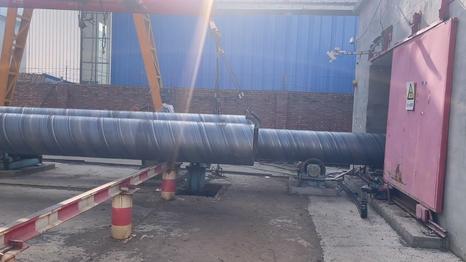
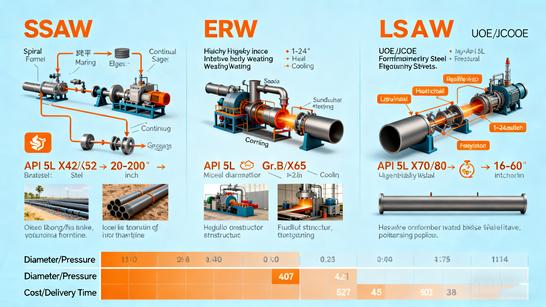
The manufacturing process of SSAW (Spiral Submerged Arc Welding) complements the Grade B material perfectly. Because the pipe is formed from a continuous steel coil, the chemical properties remain consistent throughout the entire length of the pipe. When combined with precision-cut threaded ends, the result is a pipeline that is easy to assemble yet chemically robust enough to handle the stresses of thermal expansion and hydraulic shock.
5. Direct Supply: Quality You Can Trace
As a direct manufacturer, we provide full Mill Test Certificates (MTC) with every batch of ASTM A53 Grade B pipes. We don't just claim quality; we prove it through chemical analysis and mechanical testing. By sourcing directly, you eliminate the risk of "material substitution" often found in complex supply chains, ensuring that the steel in the ground matches the specs on the blueprint.
6. ASTM A53 Grade B Threaded SSAW Pipe Technical Specifications
| Feature | Specification Details |
| Standard | ASTM A53 / A53M |
| Grade | Grade B |
| Manufacturing Type | SSAW (Spiral Submerged Arc Welded) |
| Outer Diameter | 219mm – 3020mm (8" – 120") |
| Wall Thickness | 5mm – 25.4mm (SCH 20, SCH 40, SCH 80, etc.) |
| Thread Standards | NPT, BST, API 5B (Customizable) |
| Surface Treatment | Bare, Black Painting, Anti-corrosion Oil, 3PE, FBE |
| Yield Strength | > 240 MPa |
| Tensile Strength | >415 MPa |
| Application | Potable Water, Irrigation, Piling, Low-pressure Gas |
| Length | 6m - 12m or Customized |
7. Conclusion
Choosing the right pipe is an investment in the future of a community. By prioritizing the superior chemistry of ASTM A53 Grade B Threaded SSAW pipes, you are choosing a product designed for strength, longevity, and ease of installation. Understanding the chemistry is just the start. See how this steel grade handles real-world stress in our guide on Grade B Performance in High-Pressure Conditions and Contact ASTM A53 Grade B Pipe Manufacturer