
1. The Foundation of Decision Making
In foundation engineering, the difference between "good enough" and "engineered for excellence" often lies in the steel grade. A frequent question we receive from project managers is the ASTM A252 Grade 3 vs Grade 2 strength comparison. While both grades serve the construction industry, understanding their ASTM A252 piling pipe mechanical properties is the key to optimizing both project safety and budget.
2. Performance Breakdown
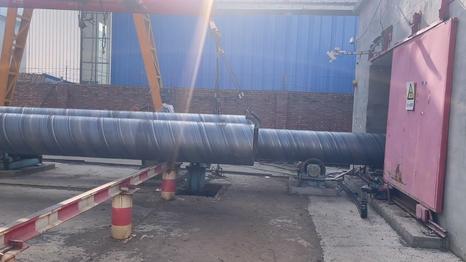
The most critical metric is the minimum yield strength of ASTM A252 Grade 3, which stands at 45,000 psi (310 MPa), compared to 35,000 psi (240 MPa) for Grade 2. This nearly 30% increase in strength isn't just a number—it directly impacts the structural performance of spiral welded pipe piles. For high-load foundation piles ASTM A252, choosing Grade 3 allows for a leaner wall thickness design without compromising the steel pipe pile safety factor calculation, potentially saving tons of steel across a large-scale site.
3. Strategic Selection
For simpler, low-rise structures, Grade 2 offers cost-effective piling pipe solutions SSAW. However, for bridges, high-rises, and marine environments, the superior durability of Grade 3 is non-negotiable. As a global provider of wholesale ASTM A252 steel piles for construction, we’ve seen that investing in higher grades upfront drastically reduces the risk of pile deformation during driving, ensuring a smoother construction timeline.
4. Core Performance Comparison
| Properties | ASTM A252 Grade 2 | ASTM A252 Grade 3 | Engineering Value |
| Min. Yield Strength | 35,000 psi (240 MPa) | 45,000 psi (310 MPa) | +30% Load Capacity; significantly reduces the risk of pile deformation during high-pressure driving. |
| Min. Tensile Strength | 60,000 psi (415 MPa) | 66,000 psi (455 MPa) | Provides superior structural integrity, ideal for deep-water operations and high-rise foundations. |
| Elongation | Good | Superior | Ensures better ductility and crack resistance under extreme geological loads. |
| Recommended Use | Low-to-mid rise buildings, temporary cofferdams, light support. | Bridges, Piers, Skyscrapers, Heavy Industrial Foundations. | Grade 3 has become the industry benchmark for modern heavy-duty infrastructure. |
5. The Safety Factor & Cost-Effectiveness
Optimization Beyond the Grade: The Safety Factor Advantage Choosing Grade 3 over Grade 2 is not just about raw strength; it’s about safety factor engineering. In soil conditions with high lateral friction or unpredictable bedrock depth, Grade 3 provides a critical buffer. Because of its higher mechanical properties, engineers can often design with a thinner wall thickness while achieving the same load-bearing requirements as a thicker Grade 2 pipe. This "Strength-to-Weight" optimization is where the cost-effective piling pipe solutions SSAW truly shine—saving you shipping costs and material expenses without compromising a single millimeter of safety.
6. The Gold Standard for Marine Foundations
Why Grade 3 is the "Gold Standard" for Marine Foundations Marine environments subject steel piles to relentless axial and lateral loads from tides and currents. The structural performance of spiral welded pipe piles is pushed to the limit here. Our ASTM A252 Grade 3 products are specifically recommended for offshore piers because their higher yield point resists the constant dynamic stress that leads to fatigue in lower grades. Combined with our specialized coatings, these piles ensure your high-load foundation remains stable for half a century.
7. Ready to Optimize Your Foundation?
Not sure which grade fits your soil boring report? Click here to view our ASTM A252 Grade 3 products. Our technical team is ready to help you analyze the steel pipe pile safety factor calculation for your specific project. Don't settle for "good enough"—get the strength your structure deserves at a wholesale factory price.