
Introduction
Threaded steel pipes, essential components in various industrial sectors, from construction to oil and gas, owe their reliability and performance to intricate material science and advanced manufacturing processes. This article delves deep into the core technologies that make these pipes not just functional but exceptional. We'll explore the microscopic world of steel alloys, unravel the secrets of cutting-edge manufacturing techniques, and dissect the welding technologies that bind these pipes together with unparalleled strength.
1. Material Science & Metallurgy: The Foundation of Durability
1.1 Microstructural Influence on Corrosion Resistance
In the realm of material science and metallurgy, the corrosion resistance of threaded steel pipes, especially those meeting stringent standards like API 5L X70, is intricately tied to their microstructural characteristics. The microstructure of a metal is essentially the arrangement of its grains and phases at a microscopic level, and this arrangement plays a pivotal role in determining how the material interacts with its environment, particularly in corrosive settings.
For threaded steel pipes, a microstructure comprising fine-grained ferrite and pearlite phases is highly desirable. Ferrite, a soft and ductile phase, provides the pipe with a certain level of flexibility, allowing it to absorb stresses without cracking. Pearlite, on the other hand, is a lamellar structure composed of alternating layers of ferrite and cementite, which contributes to the overall strength of the pipe. When these phases are present in a fine-grained form, the pipe's surface becomes more uniform, reducing the number of potential sites for corrosion initiation.
In addition to these phases, the controlled addition of alloying elements such as chromium, nickel, and molybdenum is crucial. Chromium, for instance, has a remarkable ability to form a thin, adherent oxide layer on the surface of the steel. This passive oxide layer acts as a barrier, preventing corrosive substances like water, oxygen, and chloride ions from reaching the underlying metal. Nickel enhances the stability of this oxide layer, making it more resistant to breakdown under harsh conditions. Molybdenum, meanwhile, improves the pipe's resistance to pitting corrosion, a localized form of corrosion that can lead to rapid failure if left unchecked.
The significance of this microstructural integrity becomes particularly evident in marine and high-corrosion applications. In marine environments, pipes are constantly exposed to saltwater, which is highly corrosive due to its high chloride content. Similarly, in industrial settings where chemicals are present, the pipes must withstand a variety of aggressive substances. The fine-grained ferrite-pearlite microstructure, combined with the protective oxide layer formed by the alloying elements, ensures that these pipes can endure such harsh conditions for extended periods, thereby enhancing their longevity and reducing the need for frequent replacements.
1.2 Strength Enhancement Through Alloying
Stainless steel grades like 304 and 316L are renowned for their exceptional strength, which is a direct result of their carefully balanced composition of chromium, nickel, and carbon. The austenitic microstructure that these alloys possess is characterized by a face-centered cubic lattice. This unique crystal structure provides the steel with excellent toughness and ductility, allowing it to deform without breaking under high pressures and temperatures.
Chromium, as mentioned earlier, is a key element in stainless steel, contributing to its corrosion resistance. However, it also plays a role in enhancing the steel's strength by forming solid solutions with iron and other elements, thereby increasing the material's resistance to deformation. Nickel, on the other hand, stabilizes the austenitic structure, ensuring that the steel retains its toughness and ductility even at low temperatures. Carbon, although present in relatively small amounts, contributes to the steel's hardness and strength by forming carbides, which are hard, brittle compounds that reinforce the microstructure.
In the case of 316L stainless steel, the addition of nitrogen further enhances its properties. Nitrogen is a powerful austenite stabilizer and also improves the steel's resistance to pitting and crevice corrosion. Pitting corrosion is a particularly insidious form of corrosion that can lead to the formation of small, deep holes in the metal, compromising its structural integrity. Crevice corrosion, which occurs in narrow spaces or crevices, can also be a significant problem in certain applications. The addition of nitrogen helps to mitigate these issues, making 316L stainless steel ideal for use in the food and chemical industries, where hygiene and corrosion resistance are of paramount importance.
1.3 Welding Performance & Microstructural Stability
The welding performance of threaded steel pipes is another critical aspect that is directly linked to their microstructural stability during and after the welding process. Welding involves the application of heat to join two or more pieces of metal together, and this heat can have a profound impact on the microstructure of the material, particularly in the heat-affected zone (HAZ).
The HAZ is the region of the base metal that is adjacent to the weld and has been heated to a temperature high enough to cause microstructural changes but not high enough to melt the metal. If these microstructural changes are not properly controlled, the HAZ can become brittle and prone to cracking, compromising the integrity of the weld and the overall pipe.
To ensure that the HAZ retains its desired mechanical properties, preheating and post-weld heat treatment (PWHT) are critical steps. Preheating involves heating the base metal to a specific temperature before welding to slow down the cooling rate after welding. This helps to prevent the formation of brittle phases like martensite, which can form when the metal cools too rapidly. PWHT, on the other hand, involves heating the welded joint to a specific temperature and holding it there for a certain period of time before cooling it slowly. This process helps to relieve residual stresses, improve the ductility of the HAZ, and enhance the overall weld integrity.
For instance, in API 5L X70 pipes, controlled cooling rates during and after welding are essential to prevent the formation of martensite. By carefully managing the heat input and cooling rate, engineers can ensure that the microstructure of the HAZ remains stable, resulting in a weld that is strong, durable, and resistant to cracking. This is particularly important in applications where the pipes are subjected to high pressures and temperatures, as any weakness in the weld could lead to catastrophic failure.
2. Advanced Manufacturing Processes: Precision & Quality Assurance
In the realm of modern manufacturing, particularly in pipe production, the pursuit of precision and quality assurance has become paramount. Advanced manufacturing processes have emerged as the cornerstone of achieving these goals, enabling manufacturers to deliver products that meet the most stringent standards. This section delves into two pivotal advanced manufacturing processes - pre-finishing welding and online non-destructive testing - and explores how they elevate quality standards and ensure zero defects in pipe manufacturing.
2.1 Pre-Finishing Welding: Elevating Quality Standards
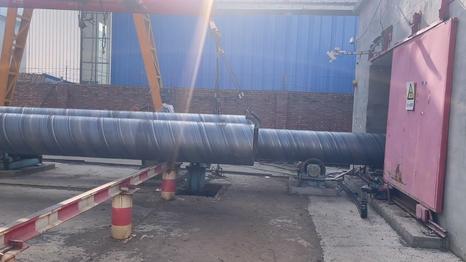
The pre-finishing welding (pre-精焊) process represents a revolutionary advancement in pipe manufacturing, transforming the way pipes are produced with a focus on precision and efficiency. Traditionally, pipe ends were welded after the final forming stage, which often led to variations in wall thickness and dimensional inaccuracies. These imperfections necessitated extensive post-production machining, resulting in increased material waste, higher production costs, and longer lead times.
The pre-finishing welding process, however, addresses these challenges head-on. It involves pre-welding the pipe ends before the final forming stage, ensuring that the welds are integrated seamlessly into the overall pipe structure. This technique offers several key advantages that significantly elevate quality standards.
Firstly, pre-finishing welding guarantees uniform wall thickness throughout the pipe. By pre-welding the ends, manufacturers can precisely control the amount of material used, eliminating variations that can occur during traditional welding processes. This uniformity is crucial for applications where consistent pressure and flow are essential, such as in oil and gas pipelines or water distribution systems.
Secondly, the process ensures precise dimensions of the pipes. The pre-welding stage allows for accurate alignment and fitting of the pipe ends, resulting in a final product that meets the exact specifications required. This precision reduces the need for additional machining or adjustments, streamlining the production process and reducing costs.
Moreover, pre-finishing welding minimizes material waste. By eliminating the need for extensive post-production machining, manufacturers can utilize the raw materials more efficiently, reducing scrap and improving overall resource utilization. This not only contributes to cost savings but also aligns with sustainable manufacturing practices, reducing the environmental impact of pipe production.
The cost-effectiveness of pre-finishing welding extends beyond material savings. The improved dimensional accuracy and reduced need for machining translate into shorter production cycles and faster turnaround times. Manufacturers can produce high-quality pipes at a faster rate, meeting customer demands more efficiently and gaining a competitive edge in the market.
In the context of threaded steel pipes, pre-finishing welding plays a particularly vital role. Threaded connections require precise dimensions and uniform wall thickness to ensure a secure and leak-free fit. The pre-finishing welding process ensures that these critical parameters are met consistently, enhancing the reliability and performance of threaded steel pipes in various applications.
2.2 Online Non-Destructive Testing: Ensuring Zero Defects
While pre-finishing welding sets the foundation for high-quality pipe production, ensuring zero defects requires a comprehensive quality assurance system. Online non-destructive testing (NDT) technologies have emerged as a game-changer in this regard, enabling continuous monitoring of pipe integrity during manufacturing.
Automated ultrasonic testing (AUT) and real-time X-ray imaging are two prominent online NDT methods employed in pipe production. AUT utilizes high-frequency sound waves to detect internal flaws, such as cracks, inclusions, or voids, within the pipe wall. The sound waves are transmitted into the pipe, and the reflected signals are analyzed to identify any anomalies. This method is highly sensitive and can detect even the smallest flaws that may compromise the pipe's structural integrity.
Real-time X-ray imaging, on the other hand, provides a visual representation of the pipe's internal structure. By capturing X-ray images during production, manufacturers can inspect the pipe for any defects or irregularities in real-time. This allows for immediate corrective action, preventing defective pipes from progressing further in the production line.
The integration of online NDT technologies into the production line offers several significant benefits. Firstly, it enables continuous monitoring of pipe quality, ensuring that every pipe produced meets the highest standards. By detecting flaws early in the production process, manufacturers can prevent costly rework or scrap, reducing production costs and improving overall efficiency.
Secondly, online NDT enhances customer trust and satisfaction. By guaranteeing zero-defect products, manufacturers can assure customers that the pipes they receive are of the highest quality and will perform reliably in their intended applications. This, in turn, strengthens customer relationships and builds a reputation for excellence in the market.
Furthermore, online NDT technologies contribute to safety improvements. By detecting potential flaws that could compromise the pipe's structural integrity, manufacturers can prevent catastrophic failures in applications such as oil and gas pipelines or chemical processing plants. This not only protects human life and the environment but also avoids costly downtime and repairs.
In conclusion, advanced manufacturing processes such as pre-finishing welding and online non-destructive testing are transforming the pipe manufacturing industry. By elevating quality standards and ensuring zero defects, these processes enable manufacturers to deliver high-performance pipes that meet the most demanding requirements. As technology continues to advance, we can expect further innovations in manufacturing processes, driving the industry towards even greater levels of precision and quality assurance.
3. Welding Technologies: Bonding Strength & Longevity
3.1 Submerged Arc Welding vs. Laser Welding: A Comparative Analysis
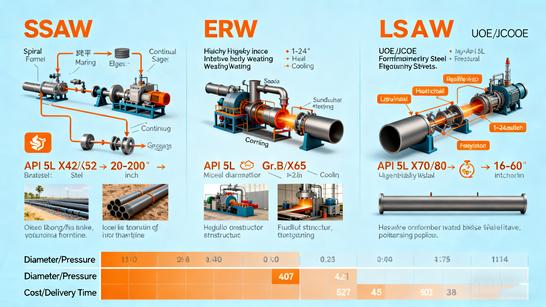
In the realm of welding technologies, submerged arc welding (SAW) and laser welding stand out as two prominent methods, each with its own set of advantages and applications. Understanding their characteristics and comparing them is crucial for selecting the most suitable welding technique for specific industrial requirements, especially in the context of pipe manufacturing where bonding strength and longevity are of paramount importance.
Submerged arc welding (SAW) has long been a staple in heavy-duty pipe manufacturing due to its remarkable deep penetration capabilities and high deposition rates. This process involves the formation of an arc between a continuously fed wire electrode and the workpiece, which is submerged beneath a layer of granular flux. The flux serves multiple purposes: it shields the arc from atmospheric contamination, stabilizes the arc, and contributes to the formation of a high-quality weld bead. The deep penetration achieved by SAW ensures that the weld penetrates deeply into the base material, creating a strong and durable joint. Additionally, the high deposition rates make SAW an efficient choice for large-scale projects, where time and cost-effectiveness are critical factors.
In contrast, laser welding offers a level of precision and speed that is unparalleled in the welding industry. This process utilizes a highly focused laser beam to melt and fuse the materials being joined, resulting in a narrow heat-affected zone (HAZ) and minimal thermal distortion. Laser welding is particularly well-suited for thin-walled pipes and complex geometries, where traditional welding methods may struggle to achieve the desired precision and quality. The high energy density of the laser beam allows for rapid heating and cooling, which can lead to improved microstructural properties and enhanced mechanical performance of the weld.
When comparing SAW and laser welding, several key differences emerge. In terms of cost-effectiveness, SAW generally has the upper hand for large-scale projects. The relatively low equipment costs and high deposition rates make SAW a more economical choice for applications where large quantities of pipes need to be welded. However, when it comes to weld quality, laser welding takes the lead. The precision and control offered by laser welding result in welds with superior mechanical properties, including higher tensile strength and better fatigue resistance. Additionally, the reduced heat input associated with laser welding minimizes distortion and residual stresses, which can be critical factors in applications where dimensional accuracy and structural integrity are essential.
3.2 Mechanical Properties of Welds & Their Impact on Pipeline Life
The mechanical properties of welds play a pivotal role in determining the overall lifespan and reliability of threaded steel pipes, particularly in demanding applications such as oil and gas pipelines. These properties, including tensile strength, yield strength, and elongation, directly influence the pipe's ability to withstand the various stresses and strains it encounters during operation.
Tensile strength is a measure of a material's resistance to being pulled apart and is crucial for ensuring that the weld can withstand the internal pressures exerted by the fluid being transported. Yield strength, on the other hand, represents the point at which the material begins to deform plastically and is important for preventing permanent deformation or failure under load. Elongation, which measures the material's ability to stretch before breaking, is also a critical factor in determining the weld's ductility and toughness.
Proper selection of welding parameters, such as current, voltage, and travel speed, is essential for achieving optimal weld bead geometry and microstructure, which in turn influence the mechanical properties of the weld. For instance, in the case of oilfield casing pipes (API 5CT J55/K55), which are subjected to extreme pressures and temperatures during drilling operations, a well-executed weld is vital for preventing premature failure and ensuring operational safety. By carefully controlling the welding parameters, engineers can ensure that the weld has the necessary strength and ductility to withstand the harsh operating conditions.
Moreover, the choice of welding filler material also plays a significant role in determining the mechanical properties of the weld. The filler material should be compatible with the base material to ensure a homogeneous microstructure and optimal mechanical performance. In some cases, specialized filler materials may be required to meet specific application requirements, such as improved corrosion resistance or enhanced high-temperature strength.
In conclusion, the selection of welding technology and the control of welding parameters are critical factors in determining the bonding strength and longevity of threaded steel pipes. By understanding the characteristics of different welding methods and the impact of mechanical properties on pipeline life, engineers can make informed decisions that ensure the reliability and safety of these vital infrastructure components.
Conclusion
The exceptional performance of threaded steel pipes, whether it's our BS 1387 Galvanized Screwed Pipe for scaffolding and structural use, ASTM A312 TP304 Threaded Pipe for the food and chemical industry, or JIS G3445 SUS316 Stainless Steel Threaded Tube for marine applications, is a testament to the intricate material science and advanced manufacturing processes that underpin their production. By understanding the microscopic world of steel alloys, embracing cutting-edge manufacturing techniques, and mastering welding technologies, manufacturers can produce pipes that not only meet but exceed industry standards, ensuring safety, reliability, and longevity in even the most demanding environments.[Link to Enhancing Fire Safety with Advanced Galvanized Steel Threaded Pipes ][Link to Zero-Defect Manufacturing: The Secret Behind Our Spiral Steel Pipes ][Link to Oilfield Casing Pipes: Withstanding Extreme Conditions with Advanced Material Science ]