
Abstract
This document provides a detailed exploration of straight seam steel pipes, covering their types, properties, manufacturing methods, and typical applications. It begins by introducing several common types of straight seam steel pipes, including Q355D straight seam steel pipes, galvanized straight seam pipes, LSAW (Longitudinal Submerged Arc Welded) pipes, and ERW (Electric Resistance Welded) pipes.Each type is examined in terms of its mechanical properties, manufacturing processes, and suitability for various applications.
The document then delves into the diverse applications of straight seam steel pipes across different sectors, such as the oil and gas industry, water supply systems, construction and infrastructure, and industrial settings.It highlights the crucial role these pipes play in ensuring the integrity and efficiency of various projects.
Furthermore, the document discusses key factors to consider when selecting straight seam steel pipes, including material grade, pipe size and wall thickness, coating and finishing, and manufacturing process.These considerations are essential for ensuring the optimal performance, durability, and cost-effectiveness of the pipes in specific applications.
2.Types of Straight Seam Steel Pipes
Straight seam steel pipes, as an important category within the steel pipe family, play a crucial role in a multitude of industrial and construction projects. Their manufacturing process, which involves welding steel plates or strips along the longitudinal direction, gives them unique characteristics that make them suitable for various applications. In this detailed exploration, we will delve into several common types of straight seam steel pipes, examining their properties, manufacturing methods, and typical uses.
2.1 Q355D Straight Seam Steel Pipe
Q355D is a well - known low - alloy high - strength structural steel grade. It has gained widespread popularity in the fields of engineering structures and mechanical parts manufacturing. When this steel is formed into straight seam steel pipes, it brings forth a set of outstanding mechanical properties.
One of the most notable features of Q355D straight seam steel pipes is their high tensile strength. This means they can withstand significant pulling forces without breaking. In engineering projects where structures are subjected to large tensile loads, such as in large - span bridges or high - rise buildings, these pipes can provide reliable support. Their high tensile strength ensures that the structure remains stable and intact even under extreme conditions.
In addition to high tensile strength, Q355D straight seam steel pipes also exhibit good toughness. Toughness refers to the ability of a material to absorb energy and deform plastically before fracturing. This property is crucial in applications where the pipes may experience dynamic loads, such as in earthquake - prone areas or in machinery that is subject to frequent vibrations. The good toughness of Q355D pipes allows them to absorb the energy from these dynamic forces, reducing the risk of sudden failure.
These pipes are highly suitable for applications that demand high load - bearing capacity and resistance to dynamic loads. For example, in the construction of large - scale industrial facilities, they can be used as columns or beams to support heavy equipment and machinery. In the transportation industry, they can be used in the construction of vehicle frames or in the manufacturing of trailers, where they need to carry significant weights while also withstanding the vibrations and impacts during transportation.
2.2 Galvanized Straight Seam Pipe
Galvanization is a process that involves coating the surface of a steel pipe with a layer of zinc. This zinc coating serves as a protective barrier, preventing the steel from coming into direct contact with moisture and corrosive elements in the environment.
Galvanized straight seam pipes are an excellent choice for outdoor applications. In outdoor settings, pipes are constantly exposed to various weather conditions, including rain, snow, and humidity. These environmental factors can cause the steel to rust and corrode over time, weakening the pipe and reducing its lifespan. However, the zinc coating on galvanized pipes acts as a sacrificial anode, corroding first instead of the steel. This sacrificial protection significantly extends the service life of the pipes.
One of the most common applications of galvanized straight seam pipes is in water supply systems. Water often contains various minerals and impurities that can be corrosive to steel. By using galvanized pipes, the risk of corrosion is minimized, ensuring a reliable and long - lasting water supply. These pipes are also widely used in fencing. The galvanized coating not only protects the pipes from rust but also gives them a clean and attractive appearance. In the construction of scaffolding, galvanized straight seam pipes are preferred because they can withstand the harsh outdoor conditions and provide a safe and stable working platform for construction workers.
2.3 LSAW (Longitudinal Submerged Arc Welded) Pipes
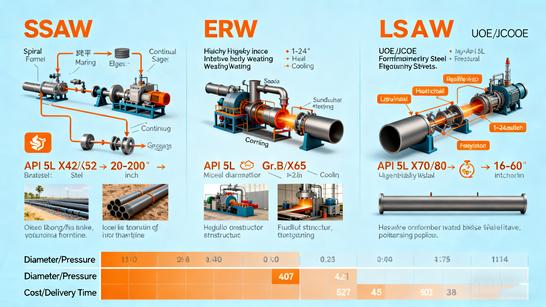
LSAW pipes are manufactured using a unique welding process. In this process, the arc welding is carried out under a layer of flux. The flux serves multiple purposes. It protects the weld from atmospheric contamination, such as oxygen and nitrogen, which can cause defects in the weld. It also acts as a heat insulator, allowing for a more controlled and uniform heat distribution during the welding process.
As a result of this advanced manufacturing method, LSAW pipes are known for their high - quality welds with minimal defects. The welds are strong and reliable, ensuring the integrity of the pipe. Another significant advantage of LSAW pipes is their uniform wall thickness. This uniformity is crucial in high - pressure applications, as it helps to distribute the pressure evenly across the pipe wall, reducing the risk of stress concentrations and potential failures.
These pipes are highly suitable for high - pressure applications, with oil and gas pipelines being a prime example. In the oil and gas industry, the pipes need to transport fluids under extremely high pressures over long distances. Our API 5L X42 LSAW Steel Pipe is specifically designed for such applications. It offers superior corrosion resistance, which is essential as the pipes are often exposed to corrosive substances in the oil and gas. Additionally, its long - term durability ensures that it can withstand the harsh operating conditions for an extended period, reducing the need for frequent maintenance and replacement.
2.4 ERW (Electric Resistance Welded) Pipes
The production of ERW pipes involves a relatively straightforward yet effective process. First, a steel strip is rolled into a cylindrical shape. Then, the edges of the strip are welded together using electric resistance. When an electric current is passed through the edges of the steel strip, the resistance generates heat, which melts the edges and fuses them together.
This manufacturing process results in pipes with smooth surfaces. The smooth surface reduces the friction between the fluid flowing inside the pipe and the pipe wall, improving the flow efficiency. It also makes the pipes easier to clean and maintain. Moreover, ERW pipes have consistent wall thickness throughout their length. This consistency is important for applications where precise control of fluid flow and pressure is required.
ERW pipes are highly versatile and can be used in a wide range of applications. In water supply systems, they can efficiently transport water with minimal pressure loss. For structural support, such as in the construction of buildings or bridges, their consistent wall thickness and good mechanical properties make them reliable components. In fluid transportation applications, whether it is for transporting chemicals, gases, or other fluids, ERW pipes can provide a cost - effective and efficient solution. Our ASTM A53 Gr.B ERW Steel Pipe is a popular choice in both seamless and welded applications. It offers excellent mechanical properties, such as good strength and ductility, and is also cost - effective, making it a preferred option for many projects.
In conclusion, the different types of straight seam steel pipes, including Q355D straight seam steel pipes, galvanized straight seam pipes, LSAW pipes, and ERW pipes, each have their unique characteristics and advantages. Understanding these differences is essential for selecting the most appropriate pipe for a specific application, ensuring the success and longevity of the project.
3.Applications of Straight Seam Steel Pipes
Straight seam steel pipes, with their unique manufacturing process and diverse properties, have become indispensable components across a wide range of industries. Their ability to be customized in terms of size, material, and coating makes them suitable for a multitude of applications. Let's delve into the detailed applications of straight seam steel pipes in different sectors.
3.1 Oil and Gas Industry
The oil and gas industry is one of the most significant users of straight seam steel pipes, especially LSAW (Longitudinal Submerged Arc Welded) pipes. These pipes play a crucial role in the transportation of crude oil, natural gas, and other hydrocarbons over vast distances.
Long-Distance Pipeline Construction
In the exploration and production of oil and gas, the extracted resources often need to be transported from remote wells to refineries or distribution centers. LSAW pipes are the preferred choice for constructing these long-distance pipelines due to their high strength. The submerged arc welding process used in their manufacturing results in welds with minimal defects, ensuring the integrity of the pipeline. This high strength allows the pipes to withstand the internal pressure exerted by the flowing hydrocarbons without rupturing. For example, in the construction of transcontinental oil pipelines that span thousands of kilometers, LSAW pipes can maintain their structural integrity even under extreme pressure conditions, ensuring a continuous and safe flow of oil.
Resistance to Harsh Environments
The oil and gas industry operates in some of the most challenging environments on Earth, including deserts, offshore locations, and regions with extreme temperatures. Straight seam steel pipes are designed to withstand these harsh conditions. They are resistant to corrosion caused by the presence of moisture, saltwater (in offshore applications), and various chemicals present in the oil and gas. The use of special coatings, such as anti-corrosion coatings, further enhances their resistance to environmental degradation. This ensures that the pipelines remain operational for extended periods, reducing the need for frequent maintenance and replacement, which can be extremely costly in remote locations.
Flexibility in Design and Installation
LSAW pipes offer flexibility in design, allowing engineers to customize the pipe diameter, wall thickness, and length according to the specific requirements of the project. This flexibility is crucial in the oil and gas industry, where different wells may produce hydrocarbons at different pressures and flow rates. Additionally, the pipes are relatively easy to install, especially in difficult terrains. They can be joined using various methods, such as welding or flanged connections, which enables quick and efficient pipeline construction.
3.2 Water Supply Systems
Galvanized and ERW (Electric Resistance Welded) straight seam pipes are widely used in water supply systems, providing a reliable and safe means of transporting potable water.
Corrosion Resistance for Safe Water Transportation
Water, especially when it contains impurities and minerals, can be corrosive to steel pipes over time. Galvanized straight seam pipes are coated with a layer of zinc, which acts as a sacrificial anode. The zinc corrodes first instead of the steel, protecting the pipe from rust and corrosion. This ensures that the water transported through the pipes remains clean and free from contaminants that could be introduced by corroded pipes. ERW pipes, with their smooth inner surfaces, also contribute to safe water transportation by reducing the build - up of sediment and bacteria inside the pipes.
Durability for Long - Term Service
Water supply systems are expected to operate for decades without significant interruptions. Both galvanized and ERW straight seam pipes are known for their durability. They can withstand the pressure exerted by the water flow and the external loads, such as the weight of the soil above buried pipes. This long - term durability reduces the need for frequent pipe replacements, saving costs and minimizing disruptions to the water supply. For example, in urban water supply networks, these pipes can serve communities for many years, providing a consistent supply of clean water.
Versatility in Application
These pipes are versatile and can be used in various parts of the water supply system. They are suitable for main water distribution lines that carry large volumes of water from the treatment plants to different areas of a city or town. They can also be used in smaller branch lines that supply water to individual buildings, such as residential homes, commercial complexes, and industrial facilities. Their ability to be manufactured in different sizes and lengths makes them adaptable to different water supply requirements.
3.3 Construction and Infrastructure
Straight seam steel pipes are integral components in construction projects, serving multiple functions and offering several advantages.
Structural Supports
In the construction of buildings, bridges, and other large - scale structures, straight seam steel pipes are used as structural supports. Their high load - bearing capacity allows them to support heavy loads, such as the weight of the building materials, equipment, and people. For example, in the construction of high - rise buildings, steel pipes can be used as columns to transfer the load from the upper floors to the foundation. Their strength and stability ensure the safety and integrity of the structure.
Scaffolding
Scaffolding is an essential part of construction projects, providing a safe working platform for workers at different heights. Straight seam steel pipes are commonly used in the construction of scaffolding due to their ease of installation and dismantling. They can be quickly assembled into a stable framework using connectors and clamps. The pipes' strength allows the scaffolding to support the weight of workers, tools, and materials, enabling efficient construction operations.
Fencing
In infrastructure projects, such as highways, railways, and airports, straight seam steel pipes are used for fencing. They provide a secure barrier that prevents unauthorized access and protects the area from potential hazards. The pipes can be coated with anti - corrosion coatings to increase their lifespan, especially in outdoor environments where they are exposed to weather elements. Their uniform shape and size make them easy to install and maintain, ensuring a neat and effective fencing solution.
3.4 Industrial Applications
In industrial settings, straight seam steel pipes are used for transporting various fluids, and their performance in harsh environments is highly valued.
Chemical Transportation
Many industrial processes involve the use of chemicals, which need to be transported from storage tanks to processing units. Straight seam steel pipes are resistant to corrosion caused by a wide range of chemicals, making them suitable for this application. They can be lined with special materials or coated with chemical - resistant coatings to further enhance their performance. For example, in the chemical industry, these pipes can safely transport acids, alkalis, and other corrosive substances without leaking or degrading.
Steam and Compressed Air Transportation
In power plants and manufacturing facilities, steam and compressed air are used for various purposes, such as power generation, heating, and pneumatic operations. Straight seam steel pipes can withstand high temperatures and pressures associated with steam and compressed air. Their high strength ensures that they do not rupture under the internal pressure, and their thermal conductivity properties allow for efficient heat transfer in steam systems. This reliable transportation of steam and compressed air is essential for the smooth operation of industrial processes.
In conclusion, straight seam steel pipes have a wide and diverse range of applications across the oil and gas, water supply, construction, and industrial sectors. Their unique properties, such as high strength, corrosion resistance, and versatility, make them indispensable components in modern infrastructure and industrial operations.
4.Factors to Consider When Selecting Straight Seam Steel Pipes
When it comes to choosing straight seam steel pipes for a particular project, a multitude of factors need to be taken into account. These factors can significantly impact the performance, durability, and cost - effectiveness of the pipes in the long run. Let's explore each of these crucial considerations in detail.
4.1 Material Grade
The material grade of a straight seam steel pipe is perhaps one of the most fundamental aspects to evaluate. Different applications have distinct requirements, and selecting the right material grade ensures that the pipe can withstand the expected loads, environmental conditions, and chemical exposures.
High - Load Applications
For projects that involve high - load scenarios, such as in the construction of large - scale industrial structures, bridges, or heavy - machinery supports, a high - strength material grade like Q355D is an excellent choice. Q355D steel has a high yield strength and tensile strength, which means it can bear substantial loads without deforming or breaking. This property makes it suitable for applications where the pipe will be subjected to significant static or dynamic forces. For example, in the construction of a large - span bridge, straight seam steel pipes made of Q355D can be used as main support members, providing the necessary strength and stability to the entire structure.
Corrosive Environments
In environments where corrosion is a major concern, galvanized pipes are the ideal option. Galvanization involves coating the steel pipe with a layer of zinc, which acts as a sacrificial anode. When the pipe is exposed to a corrosive medium, such as moisture, saltwater, or certain chemicals, the zinc corrodes first instead of the underlying steel. This protective layer significantly extends the lifespan of the pipe. For instance, in coastal areas where the air contains high levels of salt, galvanized straight seam steel pipes are commonly used in water supply systems, sewage systems, and outdoor fencing to prevent rust and corrosion.
Other Specialized Applications
There are also other specialized material grades available for specific applications. For example, stainless steel grades are used in industries where hygiene and resistance to chemical corrosion are critical, such as in the food and beverage industry or pharmaceutical manufacturing. These pipes can withstand exposure to various cleaning agents and chemicals without degrading, ensuring the integrity of the production process.
4.2 Pipe Size and Wall Thickness
The selection of the appropriate pipe size and wall thickness is crucial for ensuring the proper functioning of the system in which the straight seam steel pipes will be installed.
Pressure Requirements
The internal pressure that the pipe will be subjected to is a key determinant of the required wall thickness. Thicker walls provide greater resistance to internal pressure, reducing the risk of pipe rupture. For example, in high - pressure gas pipelines, where the gas is transported at elevated pressures, pipes with thicker walls are necessary to withstand the force exerted by the gas. On the other hand, in low - pressure water supply systems, pipes with thinner walls can be used, which can help reduce costs.
Flow Rate Considerations
The pipe size also plays a vital role in determining the flow rate of the fluid or gas through the system. Larger diameter pipes allow for a higher flow rate, while smaller diameter pipes restrict the flow. When designing a water distribution system for a large residential complex, for example, larger diameter pipes are used for the main supply lines to ensure an adequate flow of water to all the buildings. In contrast, smaller diameter pipes can be used for branch lines that supply water to individual apartments.
Cost - Benefit Analysis
It's important to strike a balance between the required performance and cost when selecting pipe size and wall thickness. Thicker - walled pipes and larger diameter pipes are generally more expensive. Therefore, a cost - benefit analysis should be conducted to determine the most economical option that still meets the system's requirements. For instance, if a slightly thinner - walled pipe can safely handle the expected pressure and flow rate, choosing it over a thicker - walled one can result in significant cost savings without compromising the system's integrity.
4.3 Coating and Finishing
The type of coating or finishing applied to straight seam steel pipes can greatly enhance their performance and longevity, especially in different environmental conditions.
Galvanized Pipes
As mentioned earlier, galvanized pipes offer excellent corrosion resistance. The zinc coating not only protects the steel from rust but also provides a smooth surface that reduces friction, which can be beneficial in fluid - carrying systems. Galvanized pipes are widely used in outdoor applications, such as in water supply systems, where they are exposed to the elements. They are also commonly used in agricultural settings for irrigation systems, as they can withstand the moisture and chemicals present in the soil and water.
Varnished or FBE - Coated Pipes
Varnished pipes, like our Varnished ERW Steel Pipe, are designed for indoor use. The varnish coating provides an anti - rust layer that protects the pipe from humidity and minor chemical exposures within an indoor environment. This type of coating is suitable for applications such as in HVAC systems, where the pipes are installed inside buildings and are not exposed to harsh outdoor conditions.
FBE (Fusion - Bonded Epoxy) - coated pipes, such as our FBE Coated ERW Steel Pipe, offer superior corrosion resistance for pipeline applications. The FBE coating is a thermosetting epoxy powder that is fused to the surface of the pipe through a heating process. This creates a seamless, durable coating that can withstand a wide range of environmental conditions, including high - temperature and high - pressure environments. FBE - coated pipes are commonly used in oil and gas pipelines, where they are exposed to corrosive hydrocarbons and harsh weather conditions.
4.4 Manufacturing Process
Understanding the manufacturing process of straight seam steel pipes is essential for evaluating their quality and suitability for a particular application.
LSAW Pipes
LSAW (Longitudinal Submerged Arc Welded) pipes are known for their high - quality welds and uniform wall thickness. The submerged arc welding process used in their production results in welds that are strong and free from defects, such as porosity and cracks. This makes LSAW pipes ideal for applications where high - pressure and high - integrity are required, such as in long - distance oil and gas pipelines. The uniform wall thickness also ensures consistent performance throughout the length of the pipe, reducing the risk of weak points that could lead to failure.
ERW Pipes
ERW (Electric Resistance Welded) pipes are cost - effective and versatile. The electric resistance welding process is relatively simple and efficient, which allows for the production of pipes at a lower cost compared to some other manufacturing methods. ERW pipes can be manufactured in a wide range of sizes and wall thicknesses, making them suitable for various applications, from low - pressure water supply systems to some industrial fluid - carrying systems. Their versatility and cost - effectiveness make them a popular choice in many construction and infrastructure projects.
In conclusion, selecting the right straight seam steel pipes requires a comprehensive consideration of material grade, pipe size and wall thickness, coating and finishing, and manufacturing process. By carefully evaluating these factors based on the specific requirements of the application, one can ensure the optimal performance, durability, and cost - effectiveness of the pipes in the project.
Summary
Straight seam steel pipes are vital components in numerous industrial and construction projects due to their unique manufacturing process and diverse properties. This document offers a comprehensive overview of these pipes, categorizing them into several types based on their material grades and manufacturing methods.
Q355D straight seam steel pipes are recognized for their high tensile strength and good toughness, making them suitable for high-load applications in engineering structures and mechanical parts manufacturing.
Galvanized straight seam pipes, coated with a layer of zinc, offer excellent corrosion resistance and are widely used in outdoor applications, such as water supply systems and fencing.
LSAW pipes, manufactured using the longitudinal submerged arc welding process, are known for their high-quality welds and uniform wall thickness, making them ideal for high-pressure applications like oil and gas pipelines.
ERW pipes, produced through electric resistance welding, are cost-effective and versatile, suitable for a wide range of applications, including water supply systems and structural support.
The applications of straight seam steel pipes span across various sectors. In the oil and gas industry, they are crucial for long-distance pipeline construction, offering high strength and resistance to harsh environments.
In water supply systems, galvanized and ERW pipes ensure safe and durable water transportation. In construction and infrastructure projects, these pipes serve as structural supports, scaffolding, and fencing. In industrial settings, they are used for transporting chemicals, steam, and compressed air.
When selecting straight seam steel pipes, it is essential to consider factors such as material grade, pipe size and wall thickness, coating and finishing, and manufacturing process. These considerations ensure that the chosen pipes meet the specific requirements of the application, providing optimal performance, durability, and cost-effectiveness. Overall, straight seam steel pipes are indispensable components in modern infrastructure and industrial operations.