
1. Product Classification and Core Technical Standards
Threaded pipes and straight seam pipes play a core role in the construction engineering field. Among them, EN 39 Q235B Pipe, a European standard scaffolding pipe, is based on Q235B material and strictly complies with EN 39 standards, with tensile strength ≥340MPa and yield strength ≥235MPa. It commonly has an outer diameter of 48.3mm and wall thickness of 3.2-4mm, making it the preferred material for Construction Support Pipe . The matching BSPP Thread Scaffolding Pipe adopts a 55° Whitworth thread structure in line with ISO 228-1, achieving mechanical connection through parallel threads (Type G). It requires seals to ensure pressure-bearing performance and is widely used in high-altitude working platform construction .
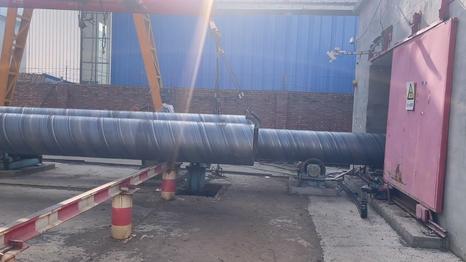
Building Structure Pipe mostly adopts straight seam welding process, produced according to GB/T 3091 standard. It combines the toughness of Q235B material and the efficiency of straight seam welding, with weld quality inspected by ultrasonic testing, suitable for building main load-bearing structures. Scaffolding Screwed Coupler Pipe enables quick assembly through threaded couplers, and its combination with straight seam pipes can reduce construction period by more than 30% .
2. Connection System and Accessory Adaptation Technology
Hot-Dip Galvanized Coupler is the core accessory for threaded pipe connection, with a zinc layer thickness ≥85μm. Its adhesion is verified by bending test. When used with EN 39 Q235B Pipe, it can withstand high salt spray environments in coastal areas, extending the service life of scaffolding to over 15 years . Its adaptation logic must meet dual standards: first, the coupler thread must accurately match the 55° tooth profile of BSPP Thread Scaffolding Pipe; second, the compatibility between the zinc layer and the pipe surface treatment to avoid electrochemical corrosion.
In the Construction Support Pipe system, the connection strength of Scaffolding Screwed Coupler Pipe directly determines support stability. Construction specifications require torque testing (≥45N·m) for each connection point and double coupler reinforcement. Especially in buildings with height exceeding 20m, the anti-corrosion properties of Hot-Dip Galvanized Coupler and the mechanical requirements of EN 39 standard must be combined .
3. Typical Application Scenarios and Selection Points
-
Construction Support Scenario: Construction Support Pipe preferably uses EN 39 Q235B Pipe, combined with Hot-Dip Galvanized Coupler to form full-space scaffolding. In bridge pouring projects, 4mm wall thickness pipes must be selected according to load requirements, with threaded connection spacing ≤1.5m. In a petrochemical maintenance project, this combination successfully withstood a construction load of 30kN/m², and the zinc layer showed no rust after 6 months .
-
Main Structure Scenario: Building Structure Pipe adopts submerged arc straight seam welding process, cooperating with BSPP Thread Scaffolding Pipe to build steel structure brackets, which must meet the weld flaw detection requirements of GB/T 9711.1. In the construction of high-rise building core tubes, the seismic performance of this pipe combination is 40% higher than ordinary steel pipes .
-
Three Selection Principles: ① Environment Adaptation: Hot-Dip Galvanized Coupler is mandatory in humid environments; ② Load Matching: 4mm wall thickness EN 39 Q235B Pipe for heavy-duty scaffolding; ③ Connection Compatibility: Ensure thread accuracy error between coupler and BSPP Thread Scaffolding Pipe ≤0.1mm .
4. Quality Control and Industry Norms
EN 39 Q235B Pipe must pass three inspections: dimensional tolerance (outer diameter ±0.5mm), hydrostatic test (calculated by formula P=2σt/D), and zinc layer adhesion test. The thread accuracy of Scaffolding Screwed Coupler Pipe must comply with GB/T 7307 standard, with 3% sampling for tensile failure test per batch . In terms of industry policies, GB/T 1499.2-2018 clearly requires Building Structure Pipe to have an elongation rate ≥22%. Products failing to meet this standard are prohibited from use in main projects, and the case of an enterprise losing orders due to ignoring this standard has become an industry warning .