
Introduction
The oil and gas industry stands as one of the most crucial and complex sectors globally, with its operations spanning vast geographical areas and involving intricate processes. A fundamental aspect of this industry is the transportation of oil and gas from extraction sites to processing facilities and end - users. This transportation is heavily reliant on pipelines, which must be able to withstand high pressures, harsh environmental conditions, and the corrosive nature of the substances they carry. Our API 5L X65 LSAW Steel Pipe is specifically engineered to meet these stringent demands, offering a combination of high strength, excellent pressure ratings, and corrosion resistance. This article will delve into the features, benefits, and applications of our API 5L X65 LSAW Steel Pipe, clearly demonstrating why it is the optimal choice for high - pressure oil and gas pipeline projects.
1.Features of API 5L X65 LSAW Steel Pipe
1.1 High Strength
The foundation of our API 5L X65 LSAW Steel Pipe lies in the use of high - quality steel. This steel is carefully selected and processed to achieve exceptional tensile and yield strength. Tensile strength refers to the maximum amount of tensile stress that a material can withstand before breaking, while yield strength is the stress at which a material begins to deform plastically. In the context of oil and gas pipeline applications, these properties are of utmost importance.
The high pressures and stresses that the pipe encounters during operation, such as those caused by the flow of oil and gas at high velocities and the external loads from the surrounding soil or water, can be immense. Our API 5L X65 LSAW Steel Pipe, with its high tensile and yield strength, is capable of withstanding these forces without undergoing significant deformation or failure. This ensures the structural integrity of the pipeline, preventing costly leaks and potential environmental disasters.
1.2 Excellent Pressure Ratings
The API 5L standard is a globally recognized set of specifications that governs the manufacture, testing, and marking of steel pipes used in pipeline transportation systems. Our API 5L X65 LSAW Steel Pipe strictly adheres to these requirements, resulting in excellent pressure ratings.
These pressure ratings are determined through rigorous testing procedures that simulate the actual operating conditions of the pipeline. The pipe is subjected to internal pressures that are significantly higher than the normal operating pressure to assess its ability to withstand short - term and long - term pressure loads. By meeting the API 5L standard, our pipe is certified to be suitable for high - pressure applications, providing peace of mind to engineers and operators in the oil and gas industry.
1.3 Corrosion Resistance
Corrosion is a major challenge in the oil and gas industry, as the pipes are often exposed to corrosive substances such as hydrogen sulfide, carbon dioxide, and various chemicals present in the oil and gas streams. Additionally, the environmental conditions, whether offshore in saltwater or onshore in areas with high humidity or chemical pollution, can also accelerate the corrosion process.
To combat this issue, our API 5L X65 LSAW Steel Pipe can be coated with various protective finishes. Fusion - bonded epoxy (FBE) is a popular choice, as it forms a tough, continuous coating that adheres firmly to the surface of the pipe. This coating acts as a barrier, preventing the corrosive substances from coming into direct contact with the steel. Another option is three - layer polyethylene (3LPE), which consists of an epoxy primer, an adhesive layer, and a polyethylene topcoat. 3LPE offers excellent long - term corrosion protection, especially in harsh offshore environments.
1.4 Long Length
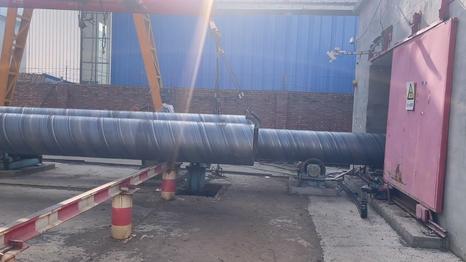
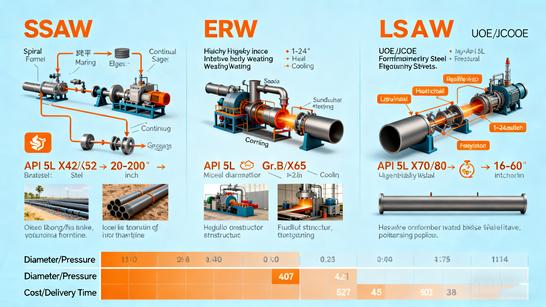
The LSAW (Longitudinal Submerged Arc Welded) manufacturing process is a key advantage of our API 5L X65 Steel Pipe. This process involves forming a steel plate into a cylindrical shape and then welding it along the longitudinal seam using a submerged arc welding technique. One of the significant benefits of this process is the ability to produce long - length pipes.
In a pipeline system, the number of welds is directly related to the integrity and reliability of the pipeline. Each weld represents a potential point of failure, as it is a weaker section compared to the continuous pipe body. By using long - length LSAW pipes, the number of welds required in the pipeline is significantly reduced. This not only improves the overall strength of the pipeline but also reduces the risk of leaks and failures at the weld joints, enhancing the safety and reliability of the oil and gas transportation system.
2.Benefits of Using API 5L X65 LSAW Steel Pipe
2.1 Reliability
The combination of high strength, excellent pressure ratings, and corrosion resistance in our API 5L X65 LSAW Steel Pipe ensures the reliability of the oil and gas pipeline. A reliable pipeline is essential for the smooth operation of the entire oil and gas supply chain.
Leaks and failures in the pipeline can lead to a variety of problems, including environmental pollution, loss of valuable resources, and disruption of production. Our pipe's ability to withstand high pressures and resist corrosion reduces the risk of such incidents. This, in turn, protects the environment by preventing the release of oil and gas into the surrounding soil or water bodies. It also ensures the continuous supply of oil and gas, minimizing downtime and maintaining the efficiency of the industry.
2.2 Cost - Effectiveness
Although the initial cost of our API 5L X65 LSAW Steel Pipe may be higher compared to some other pipe types, its long - term cost - effectiveness is undeniable. The long service life of the pipe, due to its high strength and corrosion resistance, means that it does not need to be replaced as frequently as lower - quality pipes.
In addition, the reduced number of welds in the pipeline, made possible by the long - length LSAW pipes, lowers the maintenance costs. Fewer welds mean fewer inspections and repairs are required over the lifespan of the pipeline. Moreover, the reliability of the pipe reduces the downtime costs associated with pipeline failures, such as production stoppages and the cost of cleaning up any spills. Overall, the total cost of ownership of our API 5L X65 LSAW Steel Pipe is significantly lower in the long run, making it a wise investment for oil and gas companies.
2.3 Environmental Protection
The corrosion resistance of our API 5L X65 LSAW Steel Pipe plays a vital role in environmental protection. Oil and gas leaks can have severe consequences for the environment, contaminating soil, water sources, and harming wildlife. By preventing leaks through its corrosion - resistant coating and high - strength structure, our pipe helps to safeguard the environment.
This is particularly important in sensitive areas such as offshore platforms, where a spill can have far - reaching impacts on marine ecosystems, and in onshore areas near water bodies or protected natural habitats. The use of our pipe demonstrates a commitment to environmental stewardship by the oil and gas industry, reducing the industry's ecological footprint.
3.Applications
Our API 5L X65 LSAW Steel Pipe finds a wide range of applications in the oil and gas industry. It is commonly used in onshore and offshore pipelines for the transportation of crude oil, natural gas, and refined products. In offshore applications, the pipe must withstand the harsh marine environment, including saltwater corrosion, high waves, and strong currents. Our pipe's corrosion - resistant coatings and high strength make it well - suited for these challenging conditions.
Onshore, the pipe is used in pipelines that traverse different terrains, from deserts to forests and urban areas. It can handle the varying soil conditions and external loads encountered in these environments. Additionally, it is used in pipeline networks that connect oil and gas wells to processing plants and storage facilities, ensuring the efficient and safe transfer of resources throughout the production and distribution process.
(Back to Comprehensive Guide to ERW and Seamless Pipes: Performance, Manufacturing, and Applications)